Stone and Silence
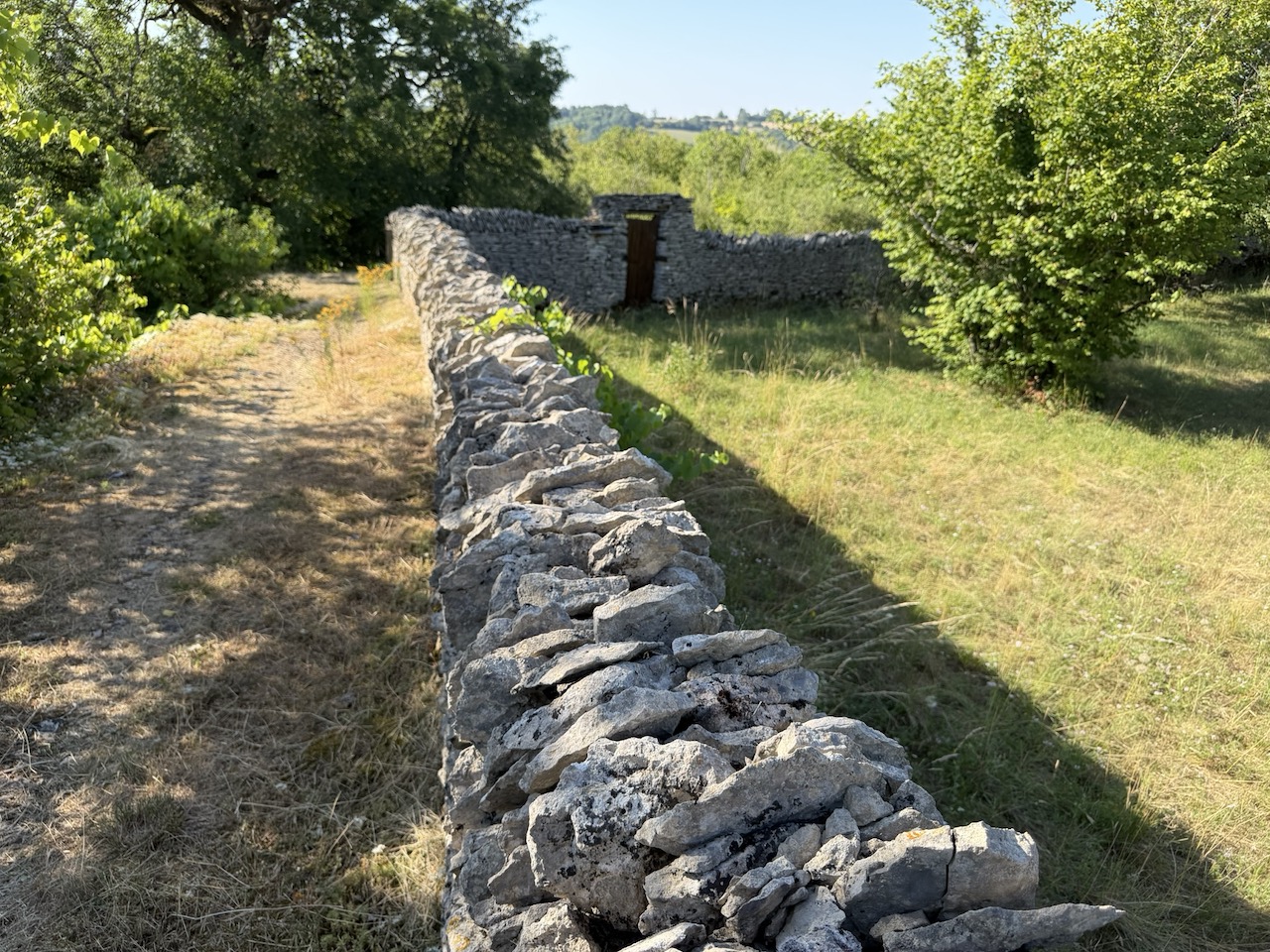
The dry stone trail
The dry stone trail
The Dry Stone Trail
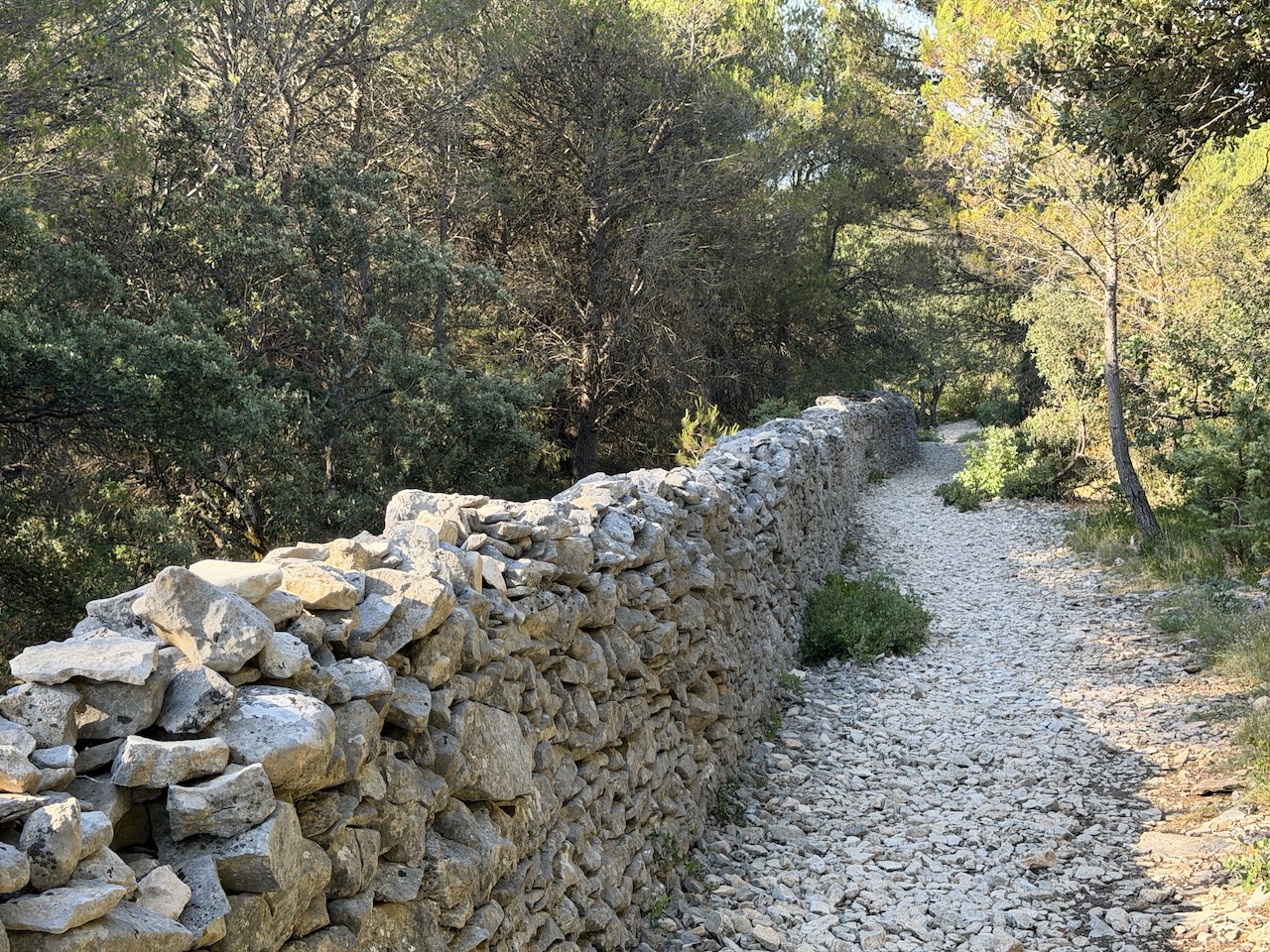
The Sentier d'Interprétation des Pierres Sèches at Champlitte is one of France's most accessible and informative dry stone heritage trails. It is located in the rolling countryside of the Haute-Saône in eastern France, and passes through a landscape filled with traditional dry stone walls, stone shelters (cabordes), woodland, and evidence of centuries of rural life. For me, coming from the Lake District where dry stone walls are woven into the fabric of the landscape, I felt comfortably at home. Apart from the heatwave France was experiencing at the time, that is. It was extremely hot, people were suffering, and the country had already seen more than 1000 excess deaths thanks to the heat.
Heatwave or not, there are walks that impress through dramatic scenery, and there are others that are hard to forget because of their history. The Champlitte trail does both.
Although the route is relatively short, 3-5 kilometres depending on how much you stray, it rewards curiosity. I took my time as a consequence. Interpretation panels are frequent and explain the structures encountered along the way, while the surrounding countryside provides an open-air museum of traditional rural life. This is a landscape where stone tells the story.
A Landscape of Limestone
The landscape of Champlitte was very different to that which I see in Cumbria. The Lake District is defined by mountains, steep valleys and exposed rock. Champlitte is gentler. The countryside rolls softly across the horizon. Fields blend into woodland and wooded ridges rather than towering fells.
The geological differences are important. Around Champlitte, limestone dominates. Farmers have spent centuries removing stones from fields as cultivation gradually brought them to the surface. Those stones had to go somewhere. Rather than seeing them as waste, generations of farmers turned them into walls, shelters, boundaries and field features. The result is a landscape shaped as much by human hands as by natural forces.
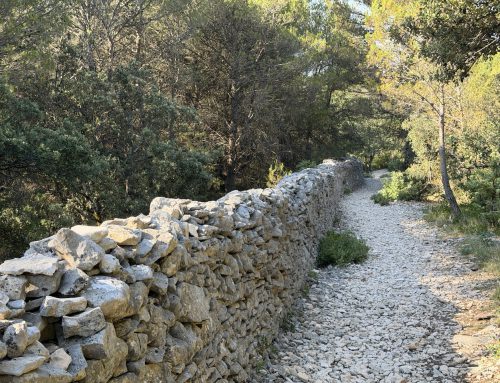
My own land in the British Lake District is similar. There too, walls are fashioned from local stone. There is some limestone, but mostly it is slate or volcanic stone. Cumbrian walls tend to be relatively narrow, and feature carefully placed coping stones along the top. In Champlitte, the dry stone walls were broader and more substantial. Coping was not always visible. To me, the French walls seemed less refined but were somehow more massive. Many appeared to rise naturally from the ground itself.
In both Cumbria and Champlitte, generations of labour are written into the landscape, yet the character of the structures differs noticeably. Fields full of stone need clearing. Livestock need controlling, and boundaries need marking. Walls are the way of it in both locations.
More Than Walls
There are far more than walls. As I walked the trail, I came across many different dry stone features. Field boundaries, retaining structures, cairns and stone piles all contribute to an agricultural landscape that has evolved over centuries. Each structure represents serious hard work, as every stone had to be collected, transported and positioned by hand.
I found it impossible not to wonder about the people responsible for what lay around me. The landscape is effectively an archaeological archive. Each wall and structure records decisions made by farmers long gone. Unlike written history, which has frequently disintegrated or disappeared, the Champlitte records - the walls and structures - remain physically present. I just wish that the predecessors, whoever they might have been, had taken the time to engrave a stone, maybe a safely wrapped message, and left it deep within the wall, to be found later. They had not.
The Cabordes
One major highlight for me was the cabordes. These are remarkable stone shelters, and I would dearly wish to replicate them in Cumbria. The cabordes are among the most distinctive features of the Champlitte dry stone trail. Essentially, a caborde is a small, round hut with a dry stone roof. There were cabins (cabanes), too. These were rectangular dry stone buildings, with tiled roofs. The cabordes were different.
At first glance, a caborde looks like it is - a circular stone hut emerging from the woodland. It is built entirely without mortar and uses a corbelling technique in which successive layers of stone project slightly inward until the roof closes. Corbelling is an ancient masonry technique where successive courses of brick or stone are progressively stepped outward to project beyond the face of a wall. A "Twice the Thickness" Rule is used, which can be summarised as the total horizontal projection never exceeding the thickness of the wall immediately below it. This engineering is remarkable. Frequently, the roofing stones are placed in a spiral manner.
I stood inside several cabordes and each time found myself looking upward and imagining its construction. Every stone supports those around it. Remove enough and the entire shelter collapses. Yet when a caborde is properly constructed, it is solid, safe, and a pleasure to sit inside. Many have survived for centuries.
The Lake District certainly contains shepherds' shelters and sheepfolds, some of which are very fancy, but a caborde is different. It has an architectural sophistication that elevates it beyond simple utility. Cabordes acted as shelters, storage spaces and places of refuge during long working days in the fields. Today they remain one of the most impressive examples of traditional dry stone craftsmanship in existence.
Life Among the Stones
A strong feature of the walk is its surroundings. It is immersed in Nature. The stone structures are clearly important, and the primary reason for my visit, but the natural environment soon began to compete. It was impossible to ignore.
Wildflowers
Wildflowers flourished, and sedum (Sedum crassulaceae) in particular. There was plenty. The genus Sedum is made up of more than 400 species of fleshy plants adapted to survive in arid environments. They are succulent plants that store water in their leaves and produce star-shaped flowers with five points. Sedum is commonly known as garden stonecrop. It thrives in gardens that receive almost no maintenance, especially with no watering at all. Right up my street. Sedum is thus an excellent choice for dry gardens, for those wanting an easy-to-manage plot, or for lovers of rockeries.
There were plenty of daisies, too. The common daisy (Bellis perennis) is sometimes called the Easter flower because the beginning of its flowering coincides with this important church festival. It was very popular in the Middle Ages. As with some other herbaceous flowering plants, it closes at night and opens in the morning to bloom in the sun. It can also close during showers, or even shortly before them, which in the countryside allows rain to be predicted slightly in advance.
Daisies are very common in Europe, where they can grow at altitudes of up to 2500 metres. They can withstand intense cold down to -17°C and reappear with the return of fine weather.
Sheep, goats and geese eat them readily. Although very nutritious, their small size sadly makes them insignificant as a forage plant.
The common daisy measures only 5 to 20 cm tall, which gave rise to the French expression “au ras des pâquerettes”, meaning “at daisy level” or “very low to the ground”.
Its name is from the Latin bellus, a diminutive of bonus, meaning “good”, hence “pretty” or “graceful”, and perennis, meaning “perennial”. The meaning would be “eternal beauty”, a symbol of the Virgin Mary.
Then there was ribwort plantain (Plantago lanceolata). Again, there was plenty, especially near the start of the trail. Ribwort plantain is sometimes called lamb’s tongue. In antiquity, this was regarded both as a medicinal and a food plant. The physicians of the Middle Ages attached great importance to various species of plantain. They recommended it for both internal and external use. It was used to treat diarrhoea, heartburn, asthma, coughs, fever, gout, rheumatism, eye infections and insect bites.
White man’s foot was the name used by native Americans for plantain, which is thought to have arrived in America with French and English colonists. Plantain seeds, travelling unnoticed beneath the soles of their shoes, are said to have become established along the paths they used.
Trees
There were plenty of trees in Champlitte. Oak (Quercus spp.) was common along the route. The so-called holly oak (holm oak - Quercus ilex) was not meant to grow there, but it did. In addition, there were both sessile (Quercus petraea) and pedunculate (Quercus robur) oaks. In the Lake District, I mostly see sessile oaks, with pedunculate just occasionally.
There were also fruit trees, the medlar (Mespilus germanica) in particular. The medlar is a small tree that is very hardy and can withstand severe frosts below -20°C. However, the fruit can also suffer from this cold and needs warmth to ripen. There was no lack of warmth when I visited, that much is certain. The heatwave seemed everywhere.
Medlar fruits must be kept for several weeks in a cool, well-ventilated place until the flesh softens, or “blets”, which makes them edible. Don’t say that word to a Russian, as a near lookalike means something rude. The medlar fruit is harvested quite late, generally in October, after the first frosts. Medicinally, the medlar is said to help with intestinal disorders. The wood of the medlar tree also has a very fine grain and can be polished. It is dense and does not split easily. These were qualities that once made it much desired for tool handles and flails.
Perhaps what impressed me most was the St Lucie cherry tree (Prunus mahaleb). This is a spreading, graceful tree which produces plenty of fragrant white flowers, followed by small fruits that are red at first but then turn black. Its wood is used in cabinetmaking and carving, as a source of tannin, and for making pipe stems and bowls, as well as umbrella handles. It is also an excellent fuel, formerly used by bakers to heat their ovens. In fruit-tree growing, the St Lucie cherry is used as a rootstock for cherry trees because it adapts well to all types of ground - poor, dry and calcareous soils, as well as damp and acidic soils. It tolerates drought well, and its fruits are used to make liqueurs. What was also very evident when I visited was that the St Lucie cherry tree can provide shelter for the scarce swallowtail butterfly. In Champlitte, this butterfly may have been scarce by name, but not by nature. I saw plenty on the trail.
Butterflies
The butterflies were astonishing and seemed especially abundant. Sadly, some even ended up squashed on my car’s front number plate during my drive to reach Champlitte. My windscreen, too, was smeared with squashed insects. This was something I used to see, but in recent times it has become less frequent. Until Champlitte, that is. Several species of butterfly drifted lazily across the path as I walked, taking advantage of the warm weather. This was the place to see swallowtails, blues and coppers, brush-footed butterflies, and skippers. These species are heavily protected by conservation groups. Butterflies abounded in Champlitte.
Living Walls
One of the most overlooked aspects of dry stone construction is its ecological value.
To many folk, a wall is simply a wall. That is not the case. Every crevice creates a microhabitat, with 25-40% of a dry stone wall being air. Mosses colonise damp surfaces, and lichens establish themselves on exposed stone. Insects exploit hidden cavities, spiders hunt between the gaps and spin their webs, while small mammals find shelter. Reptiles bask on sunlit surfaces, and foxes use walls as linear features when travelling across country at night. Birds may even nest within suitable openings. I found a tiny wren in a Lakeland dry stone wall only a few weeks ago. I am sure the same might happen in Champlitte.
Dry stone walls anywhere behave like this. If a wall is built or repaired, a new ecosystem is created. Never forget that. Champlitte’s dry stone walls were full of holes. Who knows, they might easily be mistaken for Swiss cheese.
A Landscape Worth Conserving
The Champlitte trail offers a lesson that extends well beyond France. Traditional agricultural landscapes often support unexpectedly high biodiversity. The combination of walls, woodland edges, scrub, meadows and cultivated land creates a mosaic of habitats. Wildlife benefits from this complexity.
Modern agricultural systems frequently favour simplification. Boundaries are removed. Fields become larger. Features that once supported wildlife disappear. Drive through France, and there are massive fields to see. Many seem to have no one in them. This arrangement does not favour biodiversity. If I were a fox, what linear feature might I follow? There are not many such features to see.
At Champlitte, it is different. There are no huge fields to see. Certainly, there are some vines in moderate-sized areas, but Champlitte is generally divided into smaller compartments. The result is a landscape that is historically rich and ecologically valuable. Conservationists increasingly recognise that cultural and natural heritages are closely linked. The Sentier d'Interprétation des Pierres Sèches provides an excellent demonstration of why conservationists think in this way.
Lessons from the Wall Builders
Perhaps the most important lesson from Champlitte concerns sustainability. Its various dry stone structures have survived for generations. They required no cement, no steel, no imported materials, no fossil-fuel-intensive manufacturing. Instead, they used locally available stone and human skill.
When patch-ups are needed, as with my wall repairs in the Lake District, the same materials can frequently be reused. This is deeply appealing. Modern society often assumes that durability requires increasingly complex technology. The walls of Champlitte suggest otherwise. Sometimes the most sustainable solutions are also the oldest.
Looking Back
Towards the end of the walk, I paused and looked back across the countryside. The view lacked the drama of the Langdales or the Fairfield Horseshoe in the UK’s Lake District. There were no towering mountains or plunging valleys such as I might see at home, although there were plenty of trees. Yet the Champlitte landscape possessed a quieter beauty. Walls stretched across fields and disappeared into woodland that was dotted with flowers and butterflies.
The cabordes sat almost patiently among the trees. They just stayed there, waiting for someone to use them as a store, dwelling, animal shelter, or somewhere to take cover in a storm. Cabordes were also good in the heatwave that was then affecting France. A caborde’s shade was truly cooling. To me, a caborde dropped the air temperature by a good 10° Celsius. Nothing seemed hurried. Nothing seemed temporary. Everything was relaxed. The landscape around me felt rooted in place.
Stone, Time and Silence
The Sentier d'Interprétation des Pierres Sèches is ostensibly a walk about stone. In reality, it is about much more. It is about geology, agriculture, architecture and ecology. It is about the relationship between people and landscape. It is about traditional skills that deserve preservation. Most importantly, it demonstrates how closely human and natural histories are connected. In Champlitte you do not feel dominant over Nature.
The walls, shelters and stone piles were created by people. Yet they now provide habitat for wildlife, support biodiversity and contribute to the character of the landscape. That is also true of my land in the Lake District. When I rebuild a wall on my own land, and I undertake far too many repairs, I am not simply repairing a boundary. I am maintaining a habitat, preserving a historical feature and continuing a tradition that stretches back generations.
The people who built the structures around Champlitte faced many of the same challenges encountered by generations of Cumbrian farmers. Stone had to be moved, boundaries had to be marked, shelter had to be created. The resulting structures remain among the most enduring monuments ordinary people have ever built.
Long after fashions fade and buildings disappear, a well-built dry stone wall continues to stand. I aim to get at least a century out of my work, preferably even more. I can think of no better way of leaving my mark on the world.
Walking the Sentier d'Interprétation des Pierres Sèches reminded me of that enduring truth. It reminded me that, as humans, we are part of Nature. Nature does not exist just for our benefit. Whatever happens to wildlife will one day happen to mankind. It is time - long past time - to take note and action. Otherwise, we are on the downhill slope. We are likely there already.
My Champlitte journey was a journey through landscape, history and craftsmanship. More than anything, it was a celebration of what can be achieved with nothing more than stone, skill and patience. The walk taught me plenty. Far more than I expected.
Now I must put what I have seen into practice in the UK’s Lake District. That will not be easy.
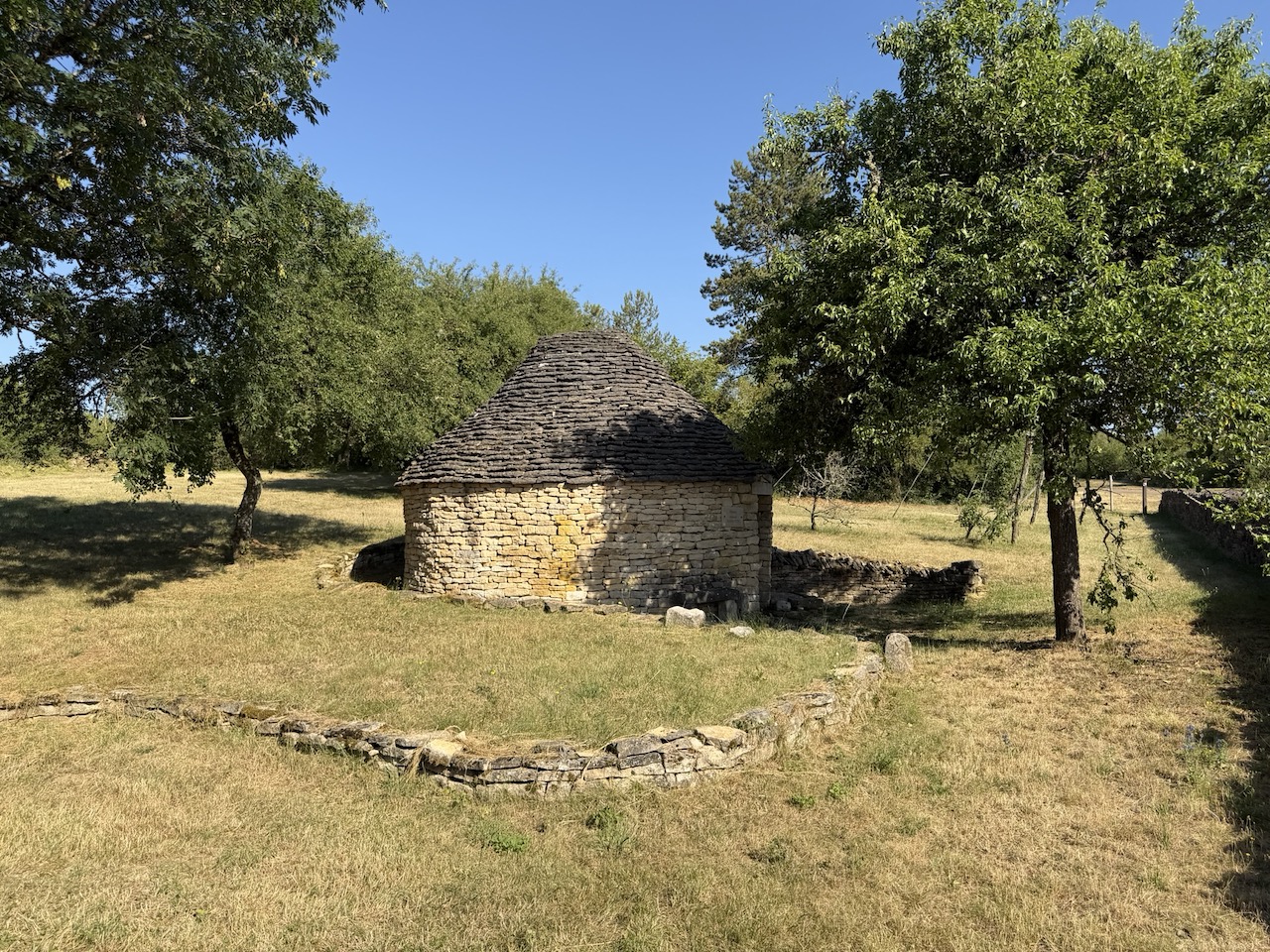
A caborde
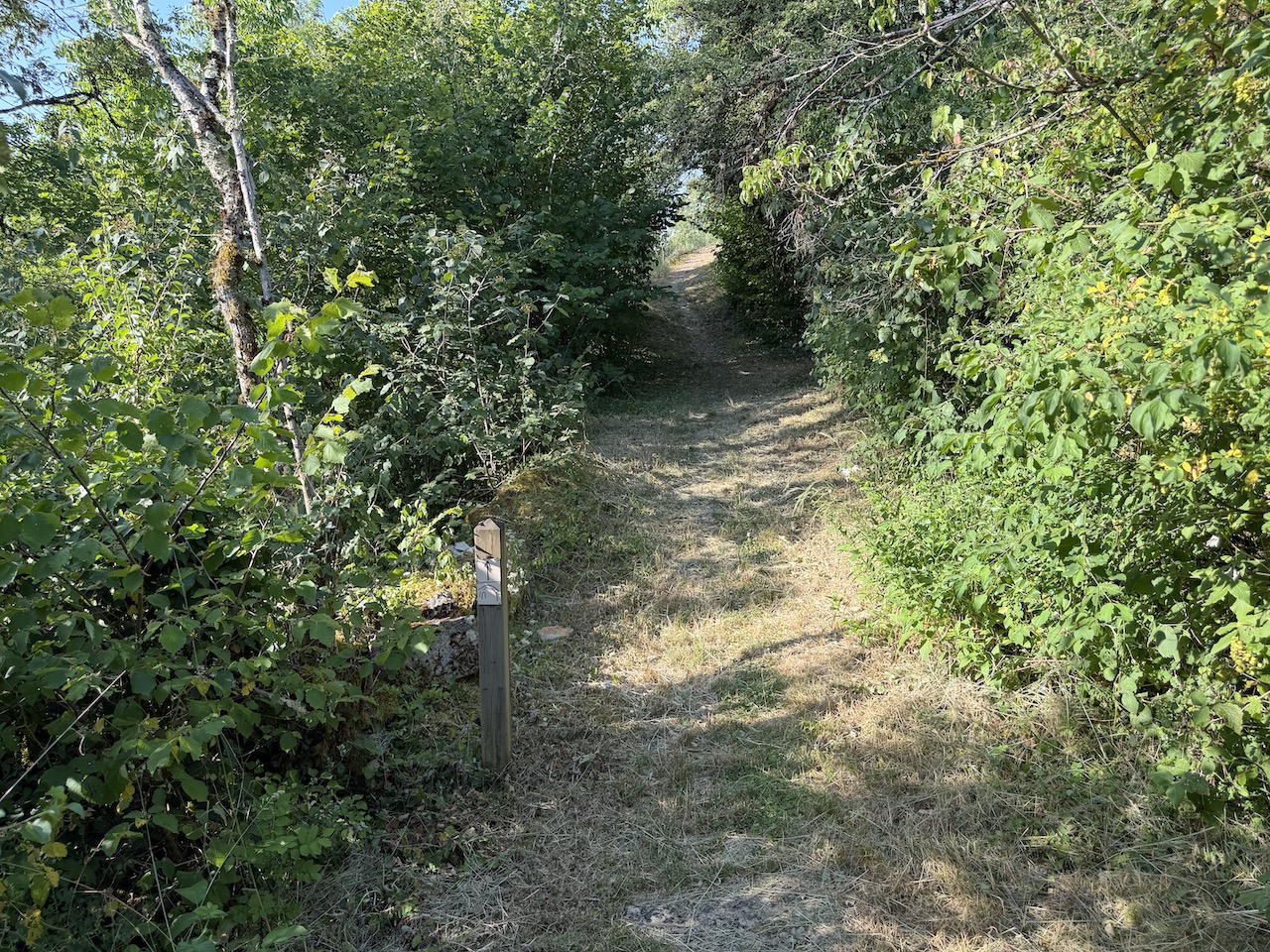
The trail is rough underfoot
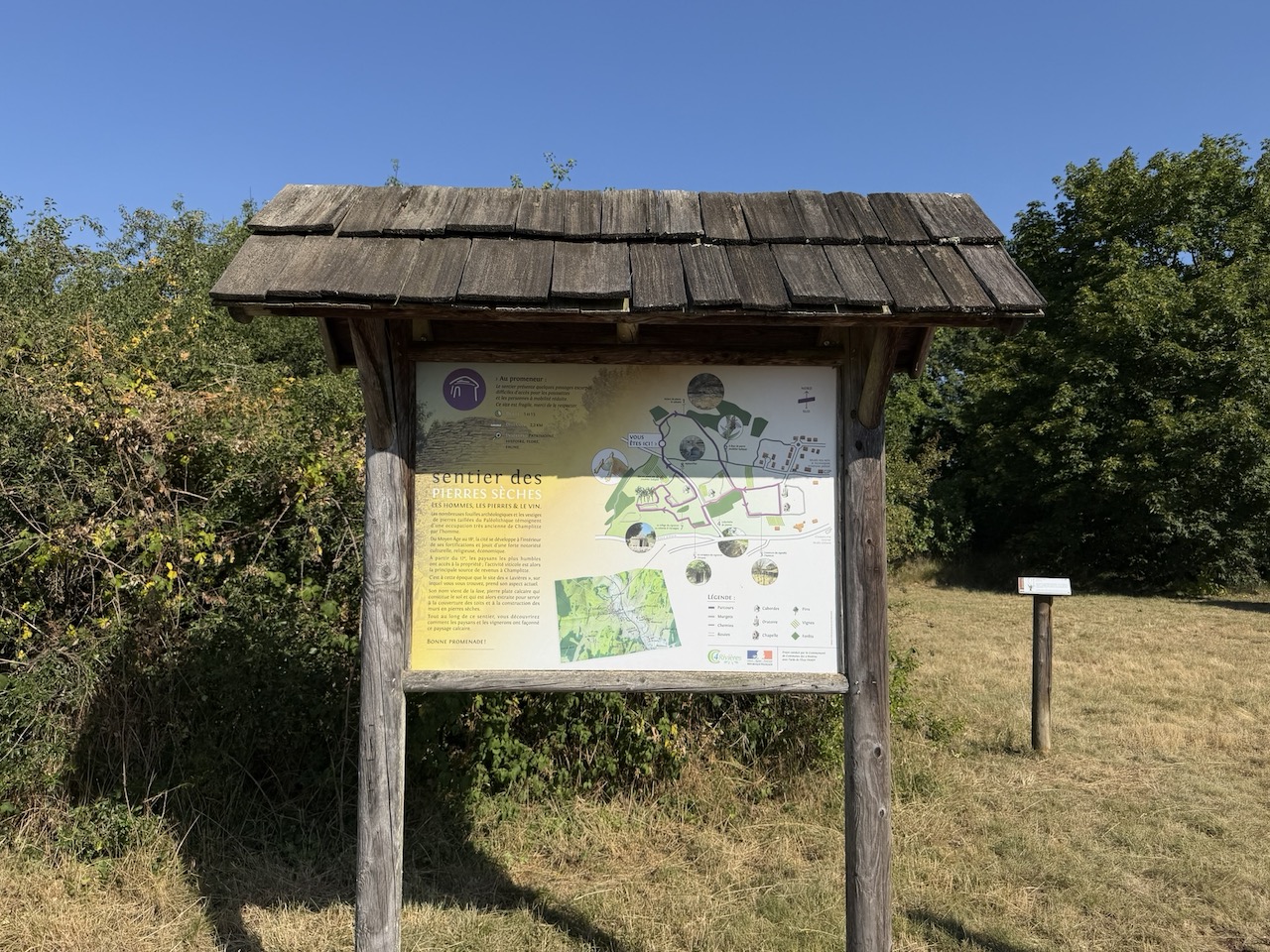
There are plenty of imformation boards
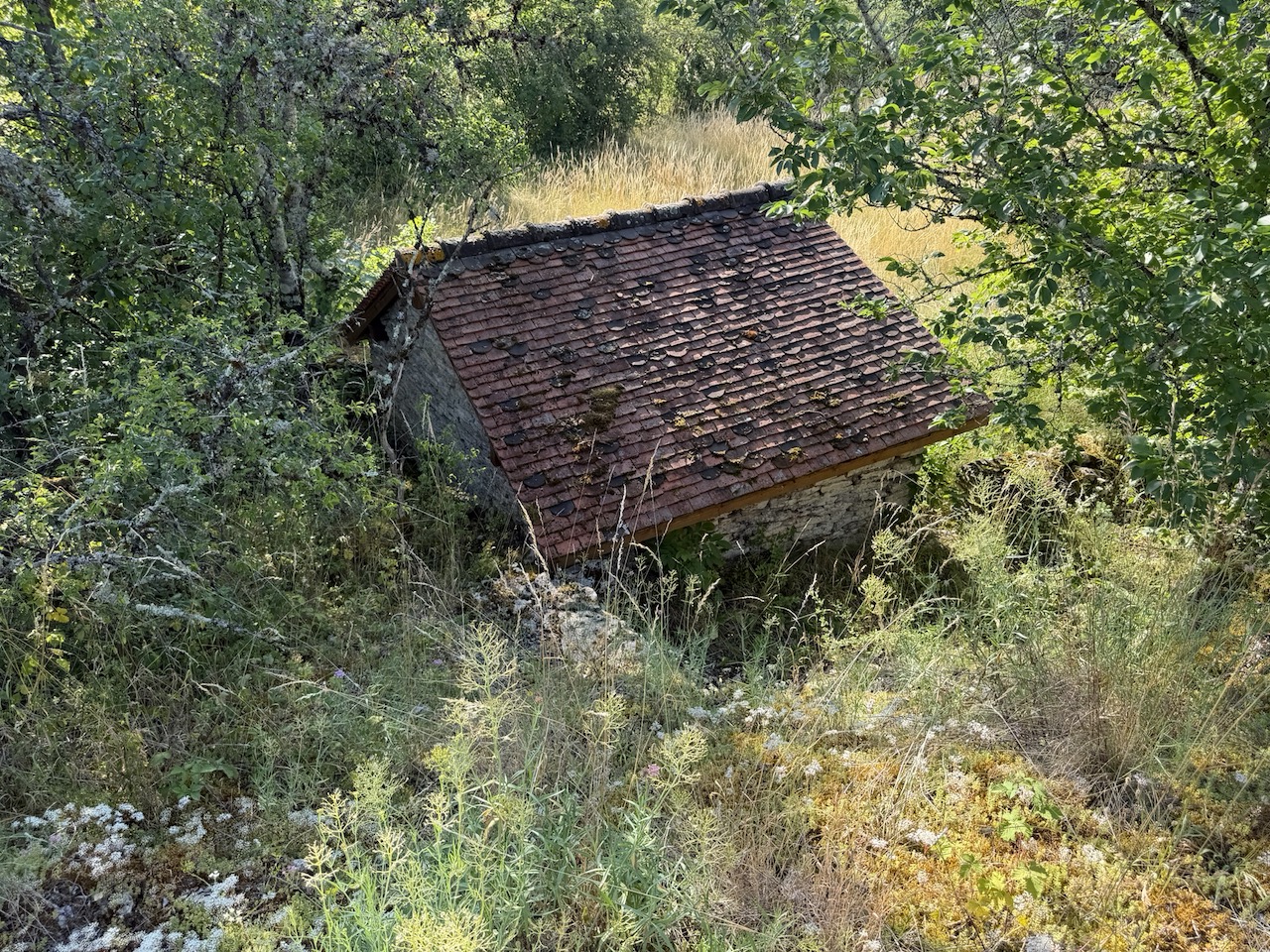
A cabane
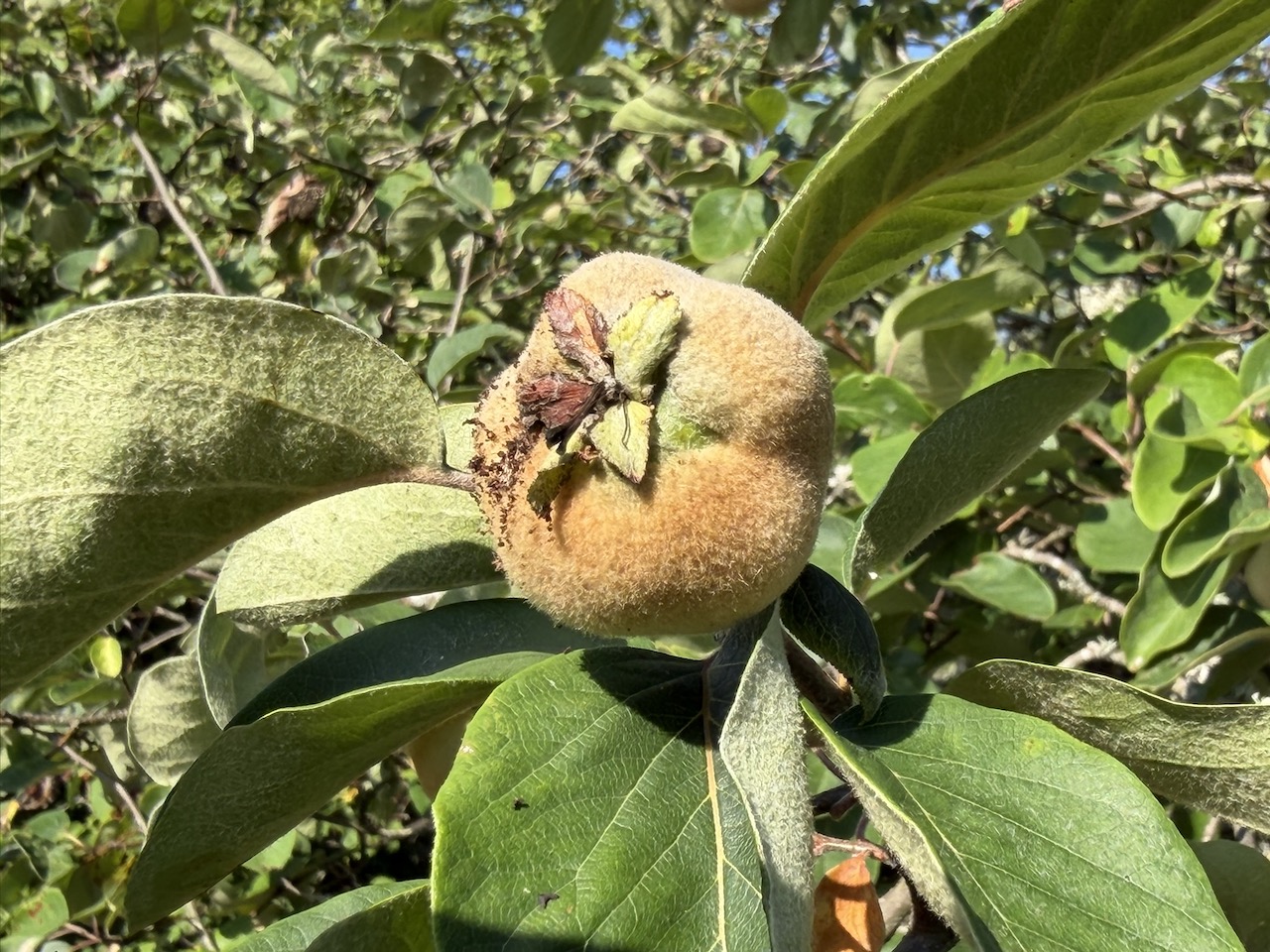
Medlar fruit
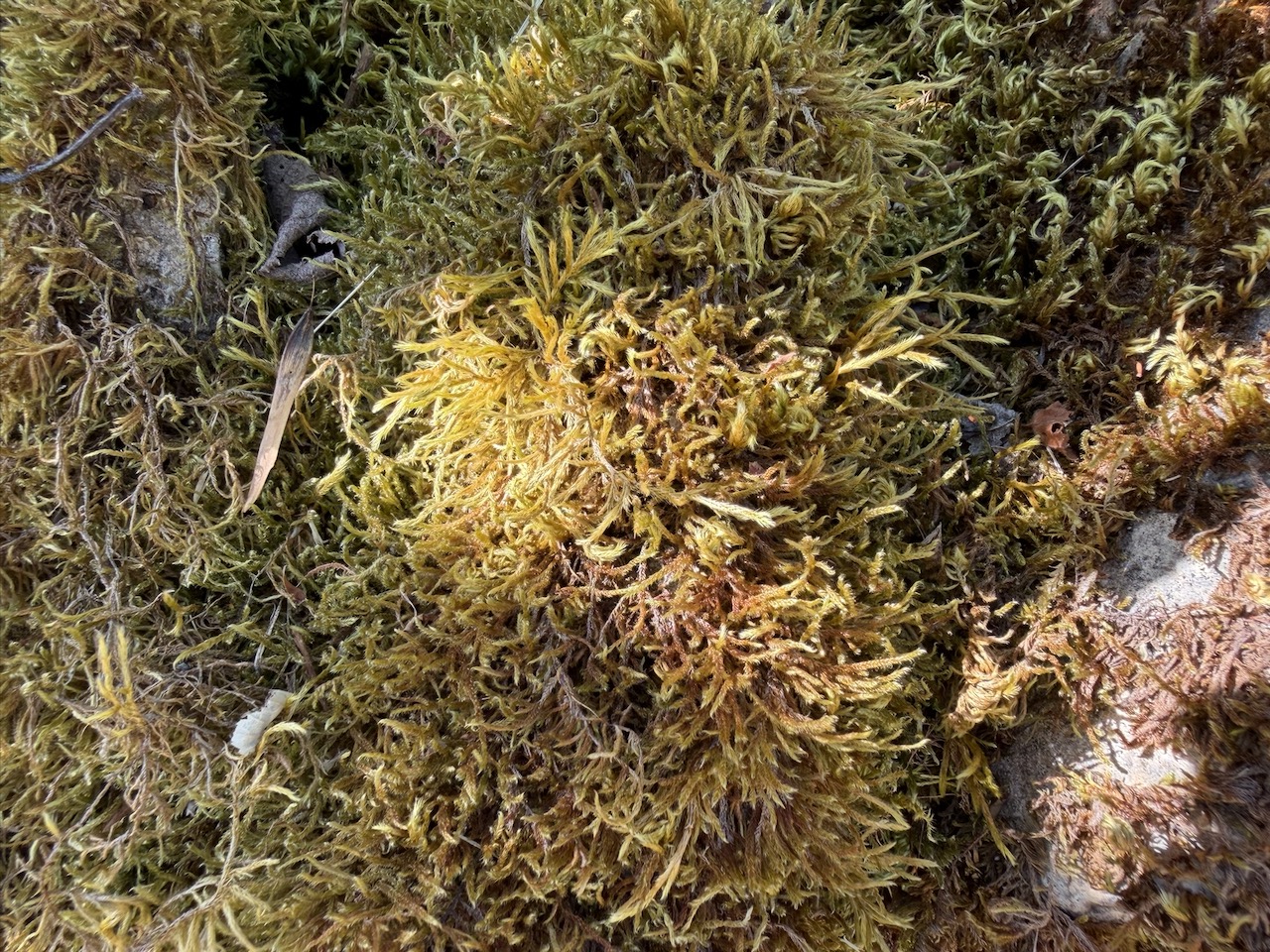
The walls were filled with moss
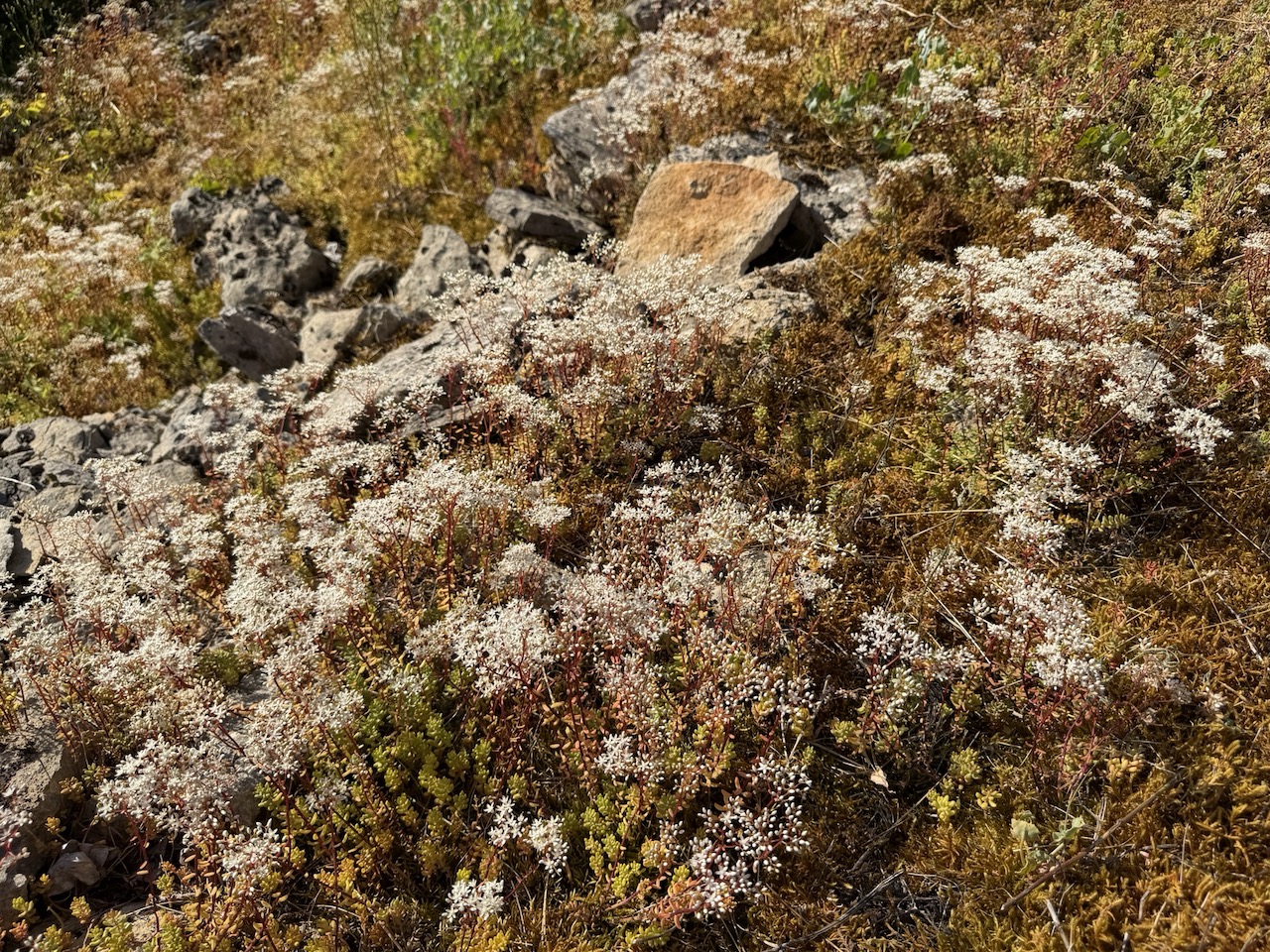
Sedum seemed to be everywhere