Walking the Plague Wall
The Mur de la Peste
The Mur de la Peste
A hot walk from Cabrières d’Avignon
I parked behind the mairie in Cabrières d’Avignon, a suitably modest place to begin a walk into catastrophe. There was no drama there, only a small Provençal town already settling into the heat of the day. A woman in her thirties stood in the shade before work, having a cigarette. She was a cleaner, or so she said, and she looked at me with the directness of someone who knew the country better than I did.
If I was intending to walk the full circuit, she said, I was mad. There was little shade, and the heat was already building. France was then in the grip of a heatwave, and it was impossible not to feel it.
I reassured her that I was not feeling quite so heroic. I would omit the full seven-kilometre route. I was merely going to find the Mur de la Peste, the Plague Wall, and come back. It sounded simple enough, which is usually the first mistake in any walk worth remembering.
From the town centre I headed west, passing the church, where a sign to the wall stands nearby. The signs exist, but not always confidently. They certainly look tatty and used. The track has the casual quality of paths that know where they are going but do not feel obliged to tell strangers. The tarmac became gravel. The gravel began to climb. Soon Cabrières d’Avignon was behind me, and the Luberon had opened into pale stone, dry vegetation and cicadas. It was already 32°C by half past ten in the morning. The heat did not simply sit on the land, it rose from it. The limestone reflected it, the track held it, and the air lost its softness.
What is the Mur de la Peste?
Partway up I met two local wallers. They were building a faced wall with cement for a local resident, using flat local limestone. It was not the dry stone of the old plague barrier, but the material was the same pale, fractured geology. They were cheerful and keen to talk. What surprised me was that neither had seen the Mur de la Peste, although it was barely ten minutes’ walk away. We often travel miles to see other people’s monuments while stepping over our own. Before I left them, I placed a small piece of stone, not from the Plague Wall, into their wet cement. They were pleased. It is trivial, but walls are made of trivial things repeated with purpose.
The Mur de la Peste was built in 1721 after plague had reached Marseille on the merchant ship Grand Saint Antoine. The vessel had sailed from the Levant carrying valuable cargo and, unseen among the people, cloth, rats and fleas, it also carried the organism that causes plague – Yersinia pestis. There were warnings and delays. There were commercial pressures, too. It took 67 days before the danger was officially admitted, by which time the disease had already passed beyond convenient containment. That is the first lesson of the wall. Disease moves faster than administration – not difficult I can imagine you saying - especially when money, reputation and denial stand in the way.
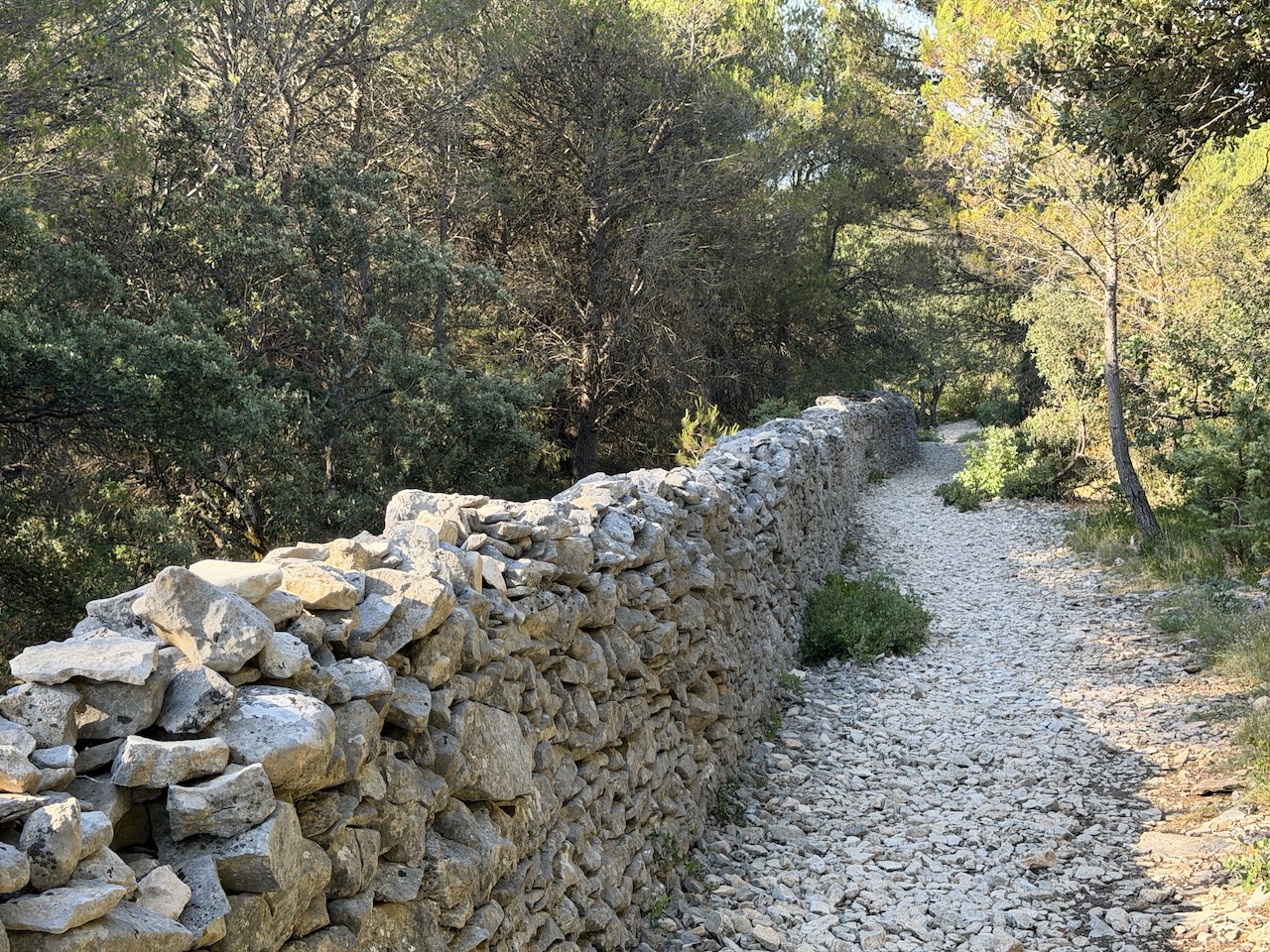
The wall was designed to protect the Comtat Venaissin, an old papal territory, and the State of Avignon. Its architect was Antoine d’Allemand. About 500 men built it in a matter of months, often said to be around 100 days. Some were even press-ganged into labour. The wall stretched for about 27 kilometres across difficult country between places such as Cabrières d’Avignon, Lagnes, Saumane, Le Beaucet, Venasque and Monieux. It was dry stone, around two metres high and a little over half a metre wide, with sentry boxes, guard shelters and towers. The intention was simple and brutal. People, animals, goods and rumours were to be stopped.
A wall against an invisible enemy
In 1721, nobody knew about Yersinia pestis. Nobody had seen it under a microscope, and nobody understood the full importance of fleas. Plague, to the people of that day, was contagion, corruption, miasma, divine judgement, bad air, bad luck, infected cloth, infected touch and the terror of another human body. In one sense, they were wrong. In another, they were not as wrong as one might think.
Yersinia pestis survives in small mammals and fleas. When an infected flea bites a person, the bacterium enters the lymphatic system and causes the painful swellings known as buboes. Hence the term bubonic plague. If bacteria enter the bloodstream or lungs, plague becomes still more dangerous and can spread between people at close range. Once in the lungs, it is pneumonic plague.
A wall can do little against bacteria, but it may do something against people. It cannot stop a flea already in a bale of cloth. It cannot disinfect a cart. It cannot cure a child with a fever. But it can reduce movement, slow trade, interrupt contact and make crossing visible. The Mur de la Peste may have been primitive, but it was also recognisably modern. It was a public health boundary before public health existed in its modern form.
Some measures used at the time now seem odd but were understandable. White wine diluted with water was said to disinfect. Surfaces touched by the infected might be treated with vinaigre des quatre voleurs, the “vinegar of the four thieves”. Heat, drying, isolation, burning, quarantine and avoidance each had some logic, even if they were poorly understood.
Dry stone, memory and repair
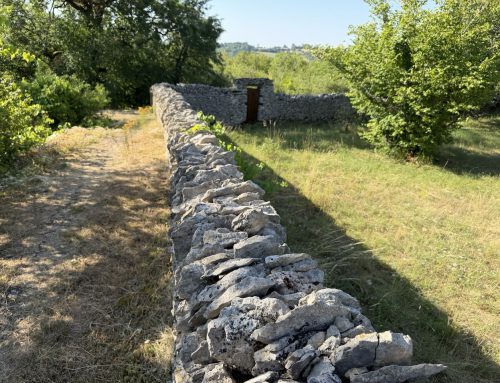
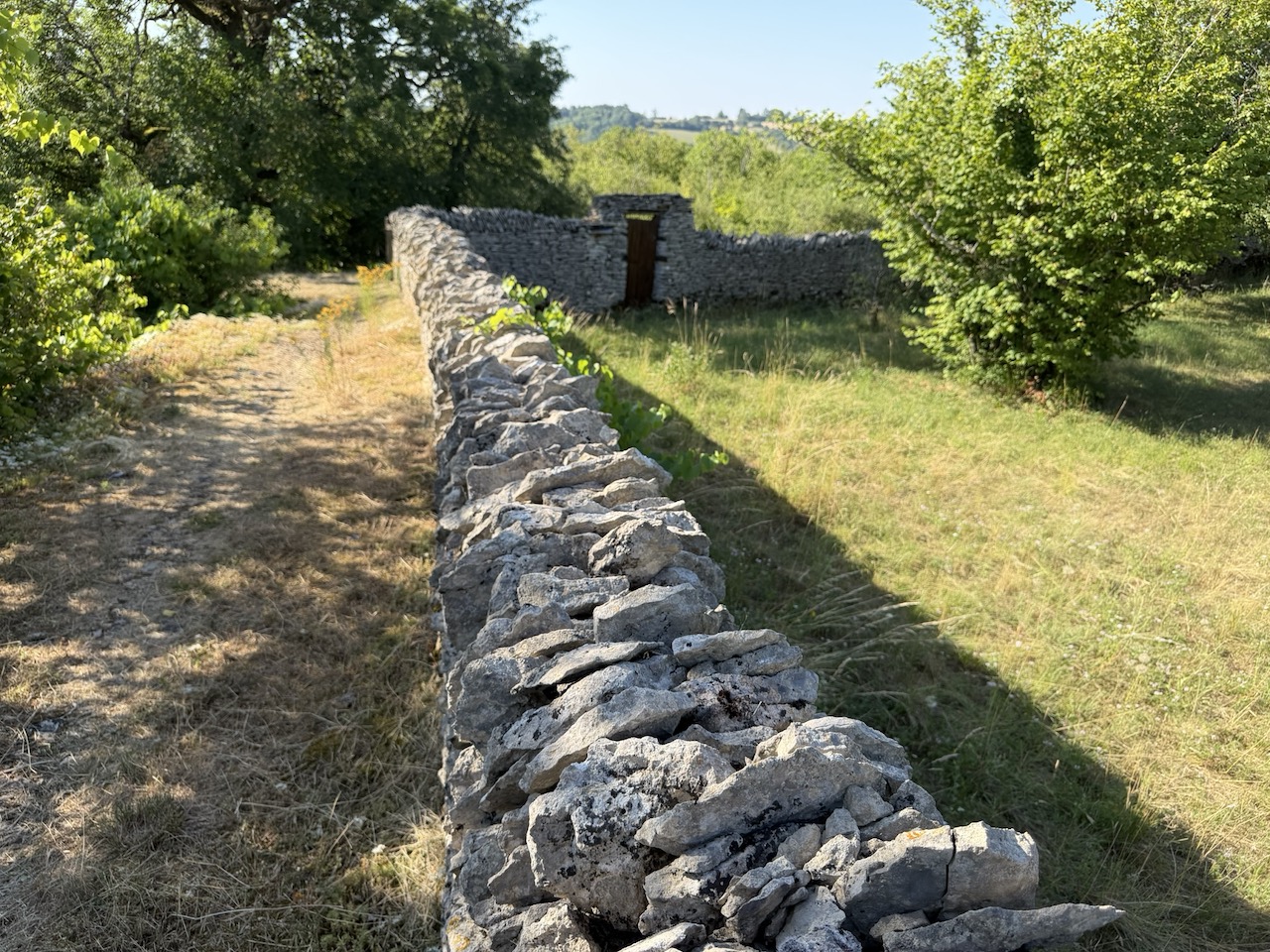
When I reached the reconstructed section of the wall, it was immediately impressive. The stones stood in courses, pale and angular, the result of restoration work carried out since the 1980s. Much of the original wall was dismantled after the plague years, its stone carried away for other uses. When fear recedes, practical life returns. The wall may have once guarded a state, but it soon became something different - a barn, a terrace, a sheepfold, even a house.
The restored section had no copings. That is the layer of broad, flat stones that, certainly in Cumbria, stand along the wall’s top. They are a critical part of the structure and hold the wall together. Instead, with the Mur de la Peste, some loose stones lay along its upper surface, likely placed there by walkers as mementos. I understand the impulse, but it is not harmless. Add a stone where it does not belong, and forces can change. One part of the reconstructed wall had already collapsed.
The comparison with the Lake District was unavoidable. At home in Cumbra, dry stone walls turn weather, sheep, ownership, labour and geology into lines across grass and bracken. In Provence, the Mur de la Peste did something different. It turned fear into stone. Yet the two traditions are cousins. Both depend on local materials, both demand the skills of the waller, and both are environmental structures as much as cultural ones.
A dry stone wall is never just a wall. It is a habitat. When I build or repair one, I am essentially creating a small zoo. In Britain, I look at walls for lichens, mosses, ferns, spiders, voles, wrens and field mice. On the Mur de la Peste, certainly on its collapsed older stones, I saw moss and lichen. On the reconstructed portion, I saw little or no sign of life. Perhaps the newer work had not yet weathered sufficiently, despite it being 40 years old. Perhaps the footpath beside the wall brought too many human feet. A wall acquires ecology as it ages. Restoration may rebuild history, but biology is slower.
Heat, silence and survival
In the strong heat, I saw butterflies and the occasional ant, plus the cicadas, which I found impossible to see, were noisy. There was no stopping them, although on occasion they would go completely silent and then, without warning, start all over again. I saw no cows, no horses, no sheep, no animal scat, no obvious sign of mammals. There were occasional tracks through desiccated woodland, but the land seemed to have withdrawn into itself. Perhaps, I thought, the wildlife was hidden in shade. Perhaps I was too late in the day despite it being only mid-morning. Perhaps I was simply too human, too heavy on my feet. Yet the absence mattered. As with the humans, the animals were suffering. Heat was as much a problem for them as it was for us.
During heat, animals adapt by avoidance. They become crepuscular or nocturnal. They reduce movement. They shelter under stones, roots, scrub or walls. Birds hold their beaks open and pant. Insects seek moisture where they can find it. Mammals conserve water by doing less. The countryside may look empty when the heat is overpowering, but it is not dead. It is defending itself. Heat changes the behaviour of all living things, not just mankind. Drought alters plant communities. Warmer conditions shift the ranges of insects, ticks and other vectors.
Why plague walls still matter
There is a temptation to treat the Mur de la Peste as picturesque. It is certainly that. It is a curiosity for walkers, something to be photographed and then left behind. But it is more than a destination. It is a line through an argument between commerce and caution. The delay in its construction was created entirely by commerce. At the time. the cargo on the Grand Saint Antoine was treated as important. Money had to be made. Reputations had to be protected. Human safety took longer to command attention.
The wall is also evidence that governments, when sufficiently frightened, can mobilise labour, militarise landscape and alter the environment at speed. It is what happened in 1721. It is also evidence that emergency structures can outlive emergencies. Take British income tax as an example, which began in 1799. Or, the United States Department of Homeland Security that was created after 11 September 2001. Both were scheduled to be dismantled or removed, yet both remain.
The Mur de la Peste did not last long as a functioning barrier. Two to three years at most. By 1723, the plague had burned out, and the wall was abandoned. Whether it did much good remains debatable. Its purpose had vanished. It finished stopping people and began simply to hold memory. The plague was so awful, it killed so many, that many wished its memory would simply go away. Perhaps that is part of the reason why the wall was dismantled so soon after the plague had settled.
Part of the reconstructed section had a guardhouse. To my eye, it looked good, although I am no expert when it comes to building guardhouses. Its roof was entirely stone, each piece held in place by pressure and gravity. It was not a romantic ruin, certainly if I imagined a uniformed man inside it, but it was a small piece of loneliness. I felt lonely just looking at it. Heaven knows what it would have been like to be a guard there. The wall was not only a barrier for the excluded, it was a place of exposure for those ordered to defend it. Heat, cold, thirst, boredom, anxiety and risk of infection would have been part of the duty, as much as muskets and orders.
Give Nature half a chance
The ground underfoot was gravelly and irregular. Good shoes were not optional. I took great care and was pleased, after barely 90 minutes, to turn around and head back to Cabrières d’Avignon.
As I strode towards the town, stagger is perhaps a more accurate word as it was rough terrain, I passed the wallers still at work. They were being serenaded by the cicadas that continued their mechanical chorus, stopping intermittently for what seemed to be no reason. I nodded my acknowledgement and staggered on. I reached the car park to find the cigarette woman no longer where I had met her. She had presumably begun her cleaning. Even so, I was pleased to have seen the Mur de la Peste. I was also happy to reach the end of my walk as the day’s heat was starting to become unbearable.
The Mur de la Peste is not just a relic of the plague in Provence. It is a warning laid in limestone. It is a reminder that the environment is not a backdrop. It is front and dead centre, and should never be ignored. The wall failed in some ways, succeeded in others, and now survives as a sad monument to both. It reminded me that barriers can be necessary, but never sufficient. They may slow harm, but they do not eliminate it. They may buy time, but never last forever.
My walk began behind a mairie and ended where it started, as walks often do. I had gone to see a wall and came away thinking about what walls reveal. The Mur de la Peste showed what people feared and valued. It showed what people were prepared to do to each other in the name of survival. If left long enough, such walls show something kinder as well. Moss enters the cracks, lizards take the sun, and butterflies pass without permission. The barrier that once divided the terrified from the threatened becomes part of the land again. The zoo has started.
Give Nature half a chance, and she will take over. She does not take long.
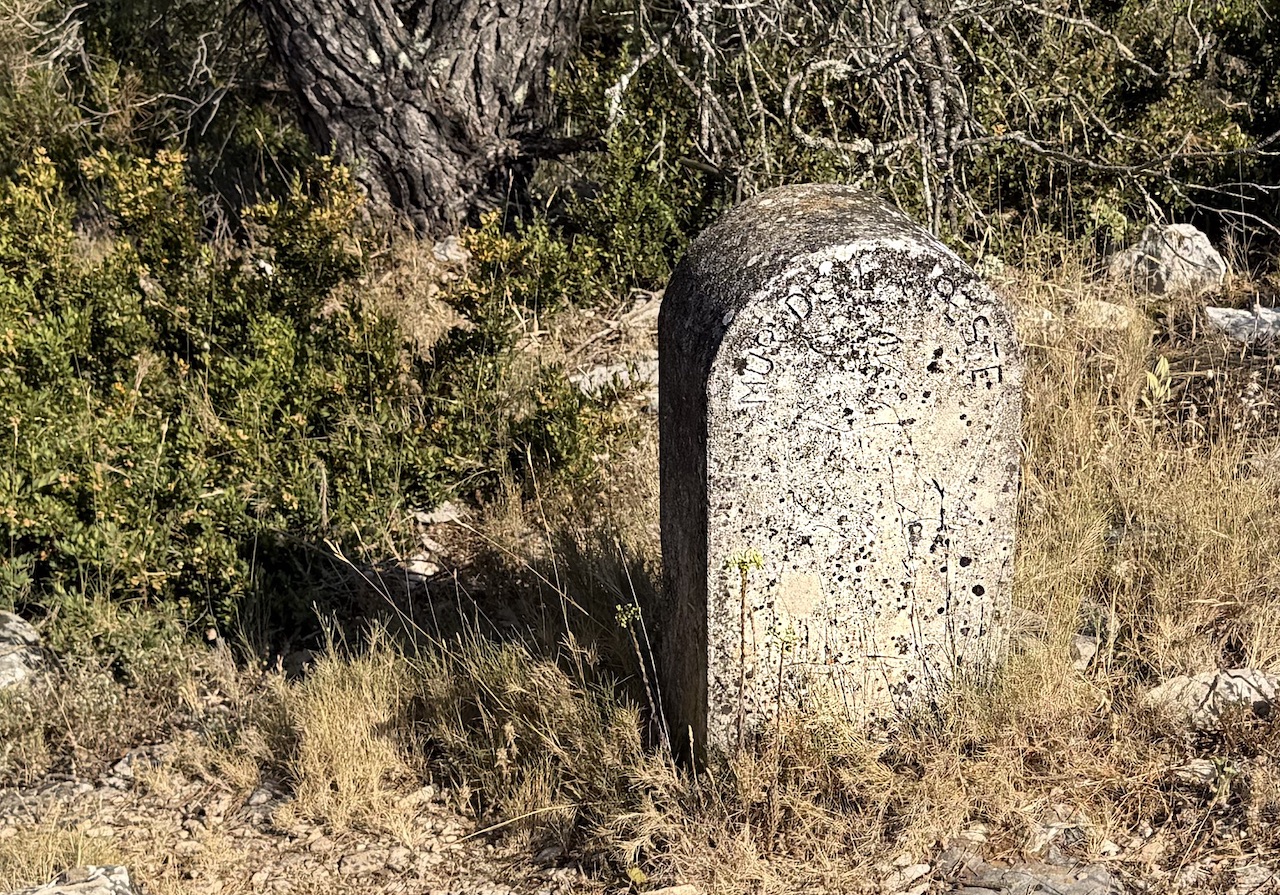
Follow these signs and you will get there
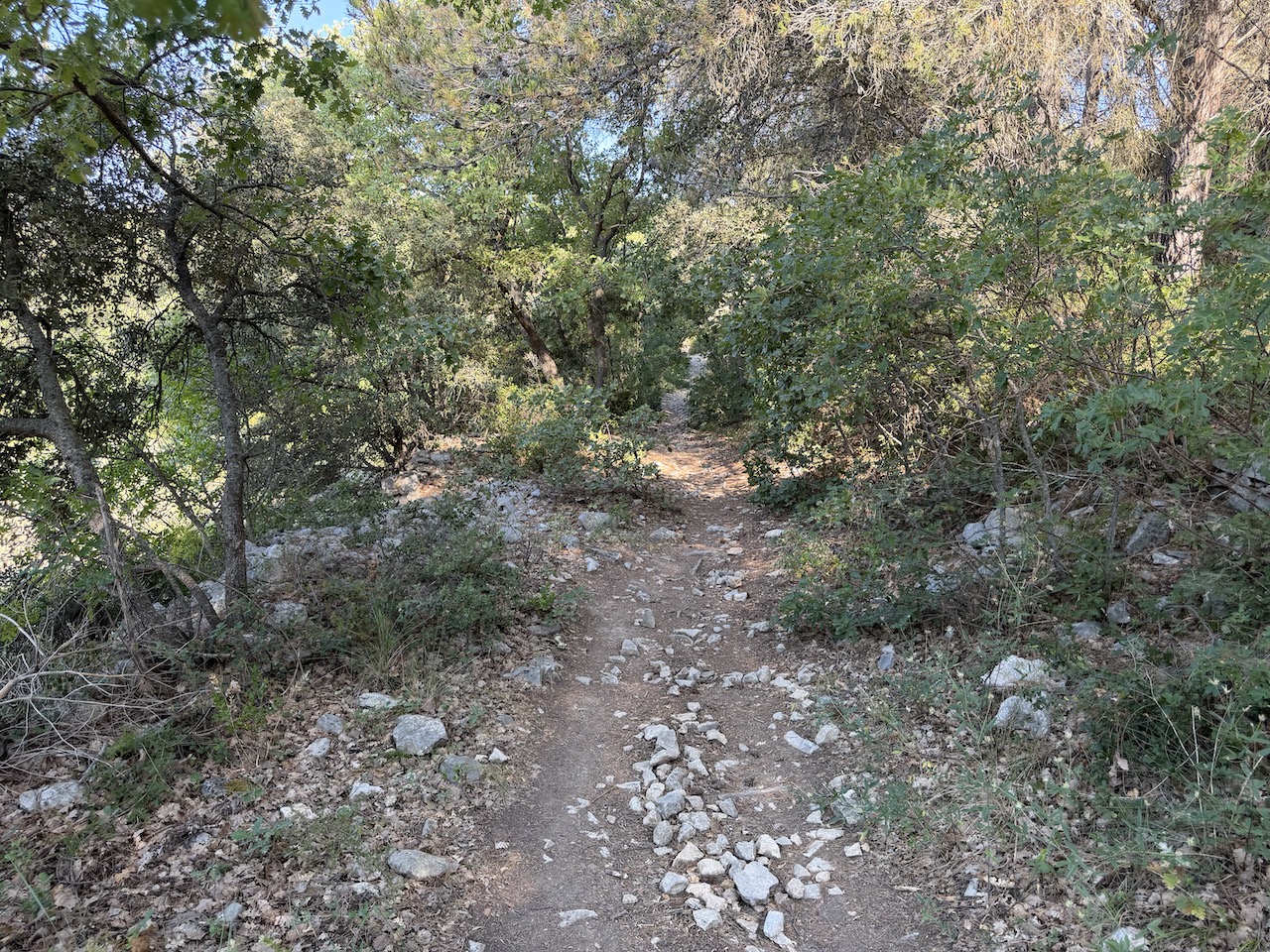
The terrain is rough and gravelly
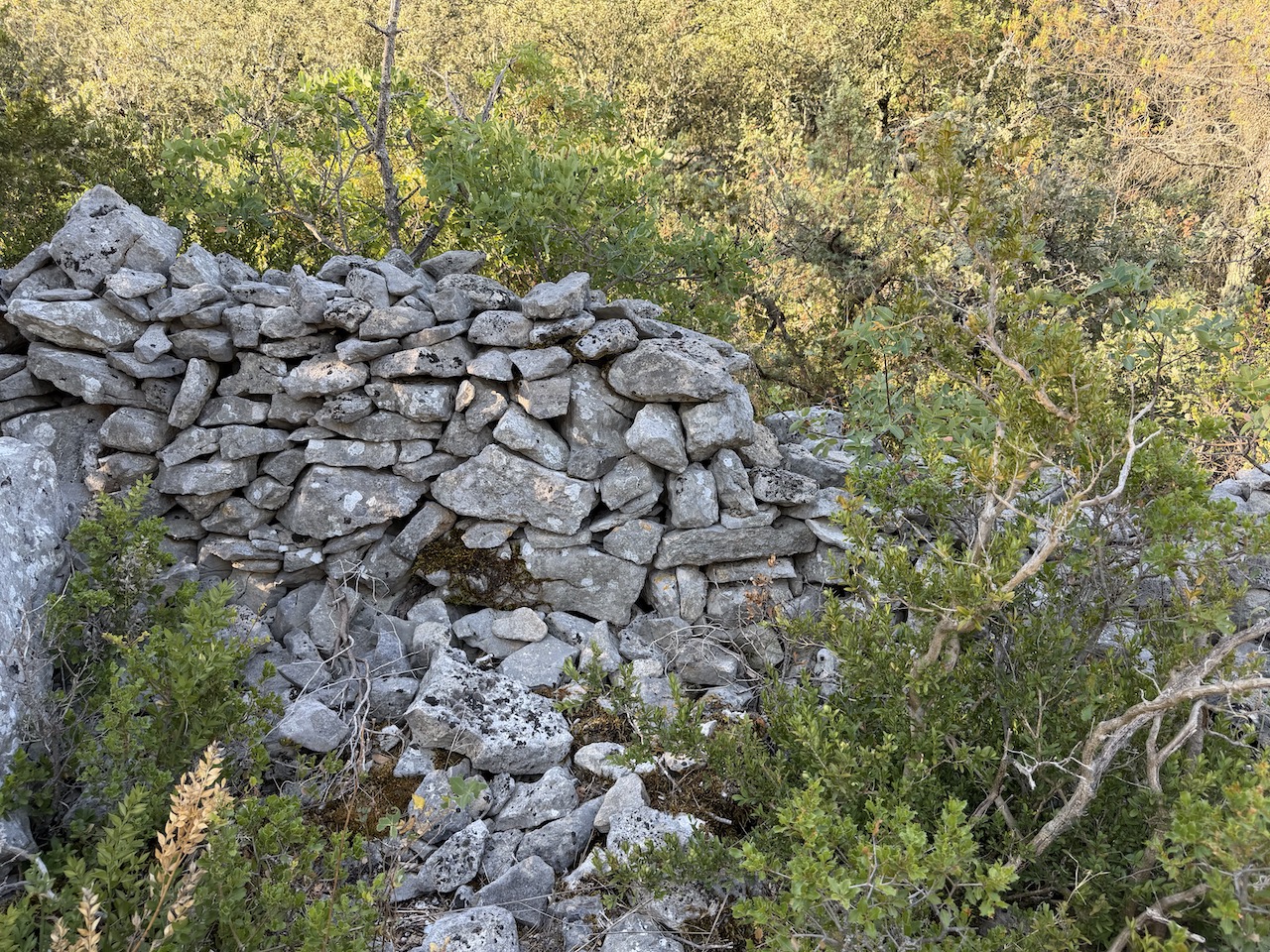
Much of the Mur de la Peste has either collapsed or been dismantled
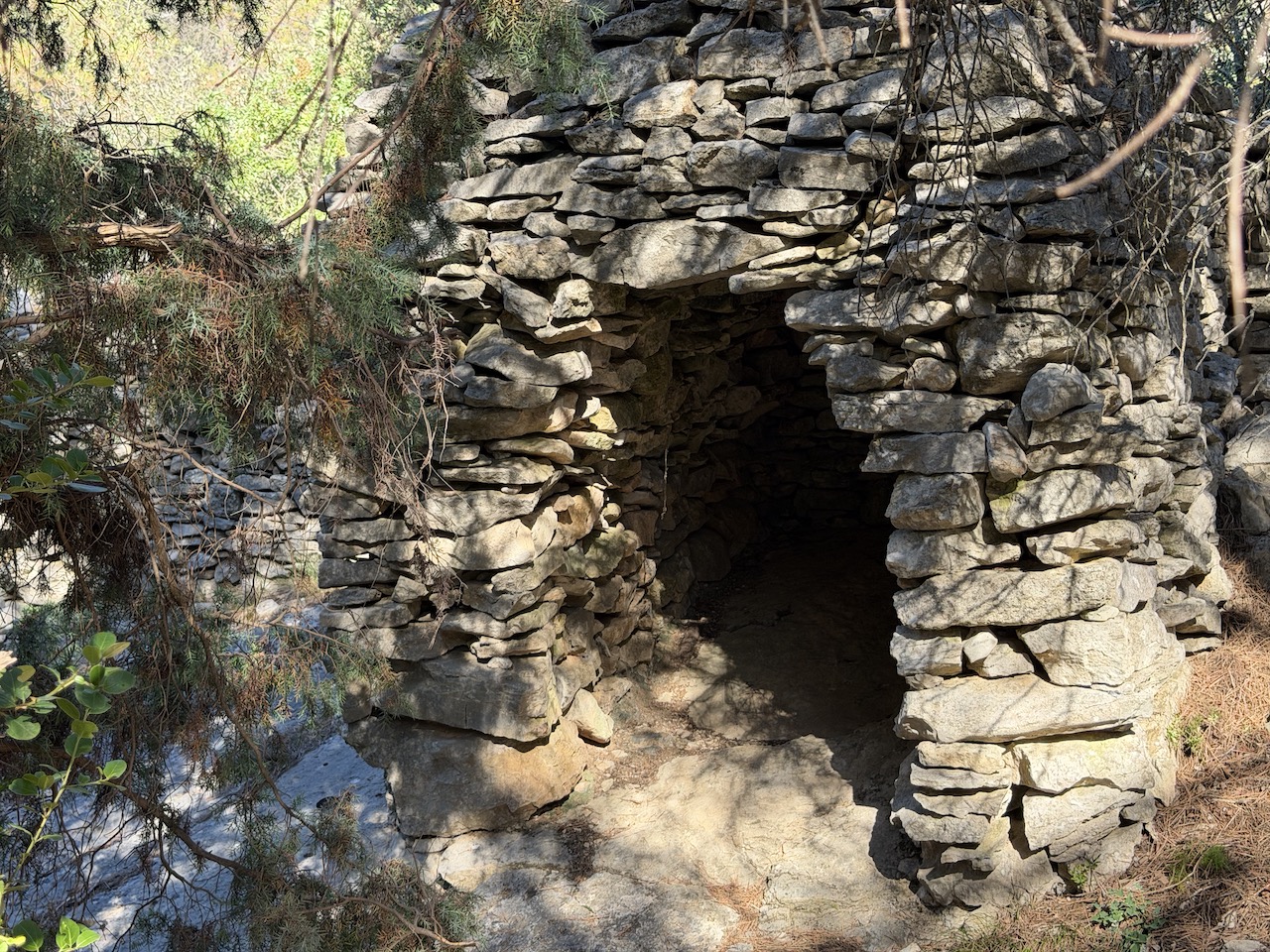
A dry stone guardhouse
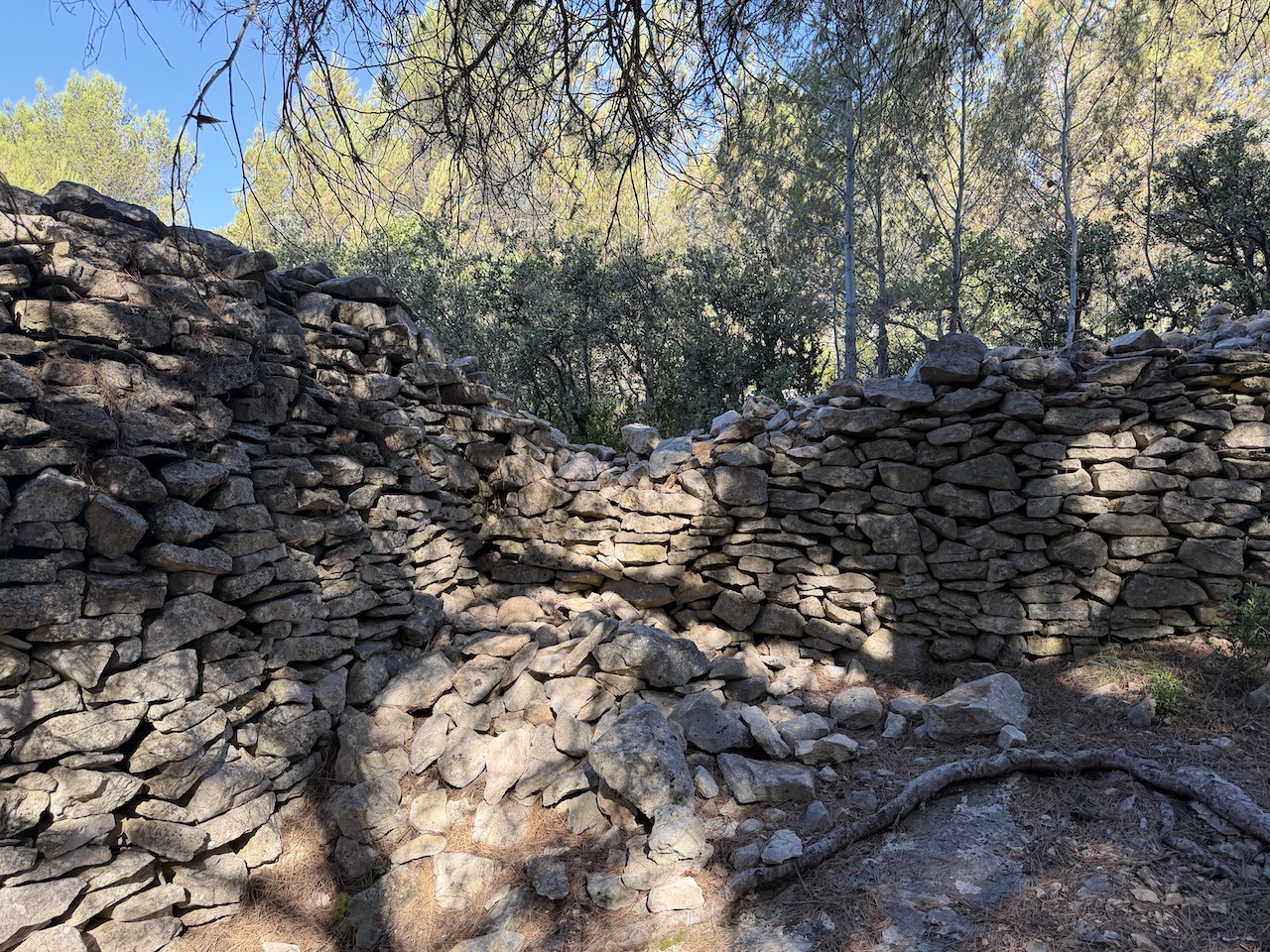
Part of the reconstructed wall had already collapsed
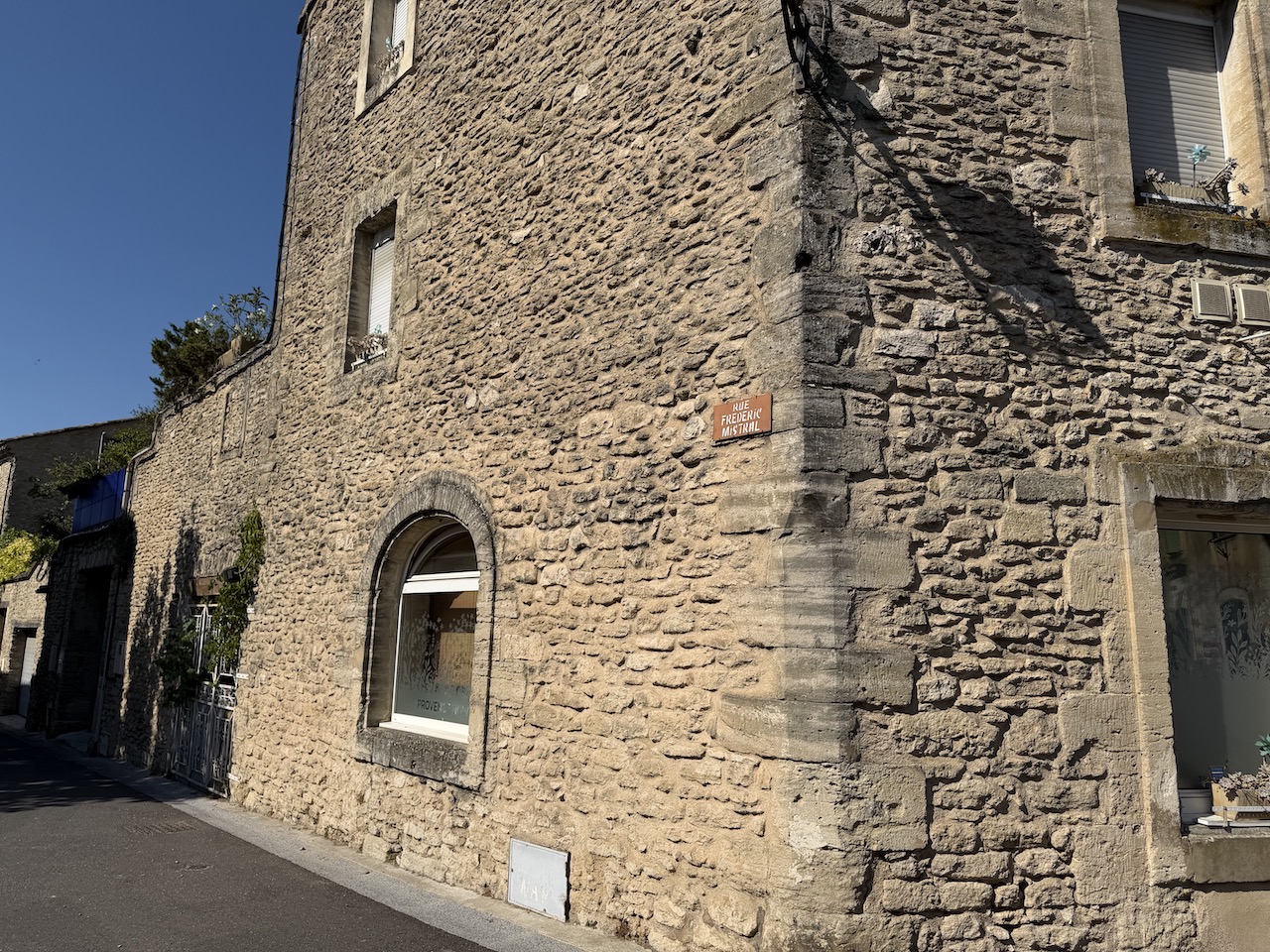
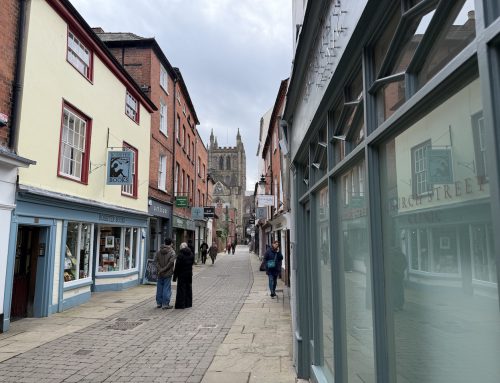
The streets of Cabrières d'Avignon