The Plastic Web of War
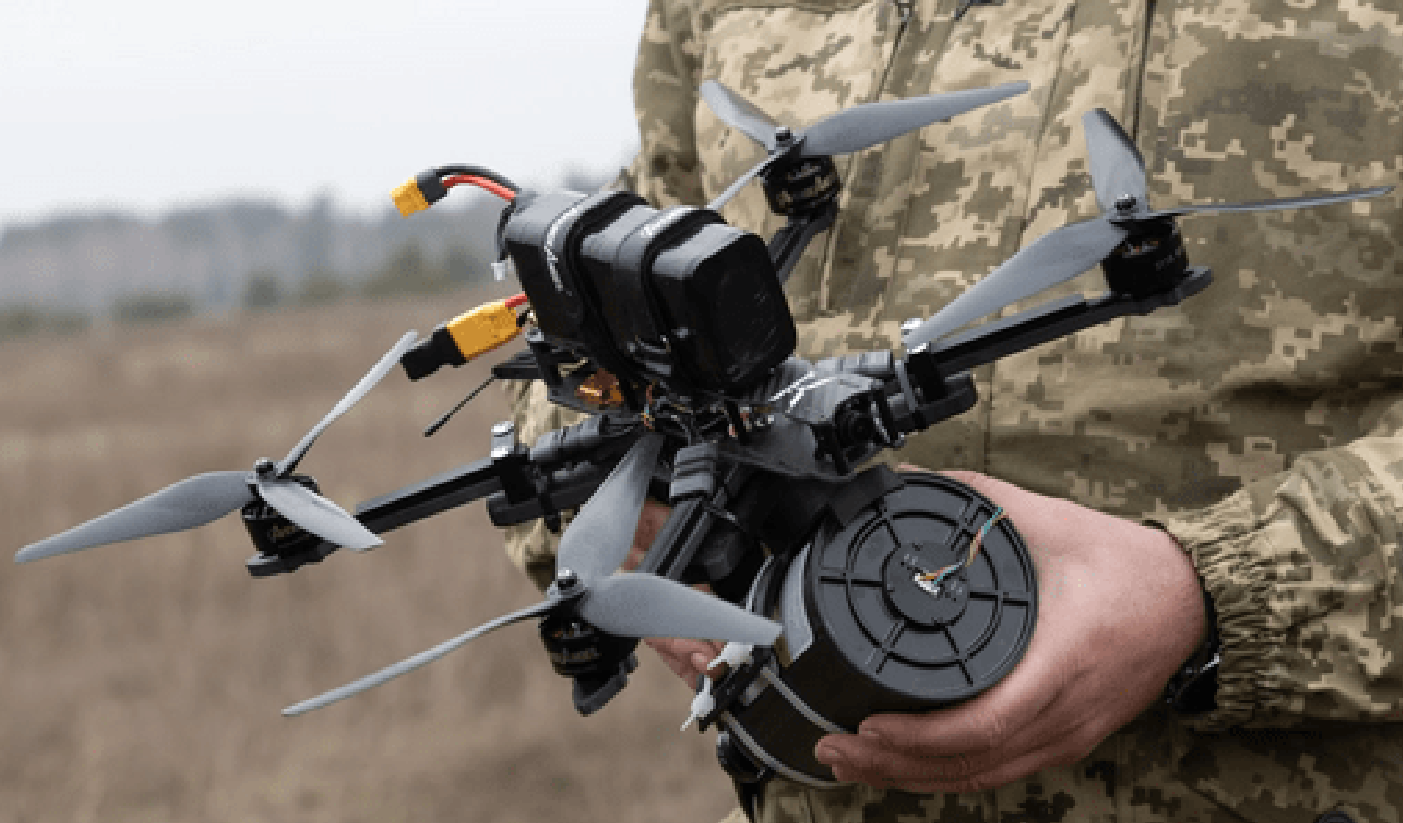
Drone cable (courtesy dronelife)
Drone cable (courtesy dronelife)
A Strand in the Grass
Imagine walking through a woodland edge ten years after a war has ended. Birds are singing, trees are reclaiming abandoned trenches, and wildflowers have returned to ground once churned by artillery and tracked vehicles. Then something catches the sunlight. A thin strand stretches between two saplings and disappears into the undergrowth.
At first it looks like a spider's web. It is not. It is fibre-optic cable, scarcely thicker than fishing line, left by a drone that flew this way years before. The fighting may be over, but part of it remains.
Wars have always left environmental debris. The First World War scattered barbed wire, communications cable, shell fragments and chemical contamination across Europe. The Second World War added wreckage, unexploded bombs and damaged ecosystems. Modern warfare is creating another legacy, almost invisible yet potentially immense. Fibre-optic drones are laying fine glass-and-plastic threads across fields, roads, rivers and woodland, and almost none of it is recovered.
The Drone Revolution
Small military drones have transformed the battlefield. Cheap electronics, lightweight cameras, improved batteries and mass production have made first-person-view drones widely available. They can scout, direct artillery or carry explosives towards a target with remarkable accuracy.
Their weakness is the radio link between drone and operator. Radio signals can be detected, disrupted or jammed. Electronic warfare has therefore become a contest between increasingly capable drones and increasingly powerful countermeasures.
The answer appears strangely old-fashioned. Attach the drone to a wire.
A fibre-optic drone carries a reel of cable and pays it out as it flies. Commands travel through the glass core and live video returns along the same route. Because the signal remains inside the fibre, conventional radio jamming is far less effective. The drone becomes something like a puppet on a very long string, except that the string may extend for tens of kilometres and information moves through it at the speed of light.
Ingenious engineering has solved one military problem while quietly creating an environmental one.
Paying Out the Line
Many fibre-optic drones carry between 10 and 20 kilometres of cable, while some reported systems carry considerably more. The line is tiny, often only a fraction of a millimetre across. At its centre is a glass filament surrounded by protective synthetic coatings.
The cable weighs little, but every flight leaves it behind. If the drone reaches its target, the cable remains. If it crashes, the cable remains. If it is destroyed, the cable remains. There is no rewind mechanism and no recovery team following the route.
One strand may appear trivial. Thousands of strands are not. A heavily contested landscape could acquire a web of cable crossing hedges, wrapped around branches, lying in ditches and buried beneath crops. It may be difficult to see even when fresh. After vegetation grows through it and leaves cover it, finding the line may become almost impossible.
The line may also cross roads and tracks, where vehicles can drag it into new areas or wind it around axles. Floodwater can carry fragments downstream. Fire can melt coatings into residues. What began as a single flight path may therefore become a much wider contamination problem.
A Return to Battlefield Wire
Physical battlefield communications are hardly new. During the First World War, vast networks of telephone and telegraph wire linked trenches, artillery batteries, observation posts and headquarters. Signal units laid and repaired cable continuously, often under fire.
There was, however, an important difference. Old communications wire contained valuable metal. Copper could be recovered, repaired and reused. Its routes were also part of an organised network. Fibre-optic drone cable is scattered wherever individual aircraft happen to travel. It is rarely mapped and has little recovery value.
The historical comparison is still sobering. A single field army during the Great War could require thousands of miles of communications cable. Modern drone warfare may eventually distribute comparable lengths across a battlefield, but in finer strands spread far more randomly through the landscape.
Counting the Uncountable
No reliable total exists for the cable already deposited. Drone production figures change rapidly, military losses are uncertain, and only a proportion of drones use fibre-optic guidance. Even so, the scale can be illustrated.
Suppose that 500,000 fibre-guided drones were used globally in a year, each carrying an average of 15 kilometres of line. They would release 7.5 million kilometres of cable. That would circle the Earth about 187 times or reach the Moon nearly twenty times.
This is not a measured total. It is a scenario, but it shows how quickly a small disposable component can become a landscape-scale pollutant. Successful military technology also spreads. Fibre-guided drones are most closely associated with the war in Ukraine, but defence organisations around the world are studying and developing similar systems. What appears exceptional today may become routine in future conflicts.
Plastic by Another Name
The material is not simply glass. Protective layers and coatings contain polymers designed to survive handling, vibration, weather and flight. Those qualities make the cable useful, but they may also allow it to persist after the battle has moved elsewhere.
Sunlight, abrasion, frost and machinery will eventually weaken exposed line. It will not necessarily disappear. Larger pieces may break into shorter fragments, and the polymer coatings may slowly become microplastics. The process turns visible litter into contamination that is harder to collect and easier to spread through soil and water.
The closest comparison may be ghost fishing gear. Lost nets and lines continue to trap wildlife long after fishers have abandoned them. Fibre-optic drone cable could become a terrestrial form of ghost gear. It is thin, strong, difficult to see and capable of remaining active in the environment long after its original purpose has ended.
Wildlife in the Web
Birds in Ukraine have already been reported using discarded drone fibre in their nests. The image is striking. A material deployed to guide weapons becomes woven into the construction of a home.
Wildlife often adapts to human debris, but adaptation is not the same as safety. Synthetic strands can tighten around the legs or wings of adults. Nestlings may become entangled. Fine line may alter drainage or the structure of a nest. Small mammals moving through dense vegetation may encounter loops and knots, while grazing animals could ingest fragments along with grass.
The risks remain poorly studied. That is part of the problem. By the time an environmental effect has been measured with certainty, millions more kilometres may already have been deployed.
Fields, Forests and Recovery
Many modern battlefields are also farms. Ukraine's contested regions include productive arable land, where farmers already face mines, unexploded ordnance, damaged irrigation and contaminated soil. Long synthetic fibres add another obstacle.
Cable can wrap around rotating parts of tractors, mowers and harvesters. It can snag cutting equipment or be pulled into bales and harvested crops. Clearing a field safely may require repeated inspection, yet a strand only fractions of a millimetre thick can vanish among stubble and soil.
Forestry and conservation work face similar difficulties. Volunteers and contractors restoring woodland, clearing scrub or repairing paths may encounter cable hidden beneath leaf litter. It could catch on tools, machinery or clothing. Recovery would be slow because a drone can lay a kilometre of fibre in minutes, while finding and removing that kilometre may take hours or days.
Who Cleans It Up
Post-war recovery has priorities. Mines and unexploded shells threaten lives immediately. Roads, bridges, homes, power supplies and water systems demand urgent repair. Fine cable scattered across the countryside will struggle to compete for attention or funding.
Military units are unlikely to return and trace each drone route. Environmental agencies may lack the staff and equipment. Farmers and landowners may inherit the problem simply because it lies on their ground. Volunteer clean-ups could help in accessible areas, but complete removal across forests, marshes and farmland is unrealistic.
The most practical response may have to begin before deployment. Manufacturers could investigate coatings that degrade more safely, reduce polymer content or become easier to detect and collect. Militaries could record approximate flight corridors and include fibre removal in environmental recovery plans. None of these measures would eliminate the damage, but they would acknowledge that battlefield equipment has a life after battle.
The Litter We Barely See
Fibre-optic drones are effective because their cable is light, unobtrusive and expendable. Those same qualities make the discarded line an unusually troublesome pollutant. It is persistent, widely dispersed, hard to detect and expensive to remove.
The environmental legacy of war is usually recognised late. Lead, chemical defoliants, fuels, explosives and ruined infrastructure have all continued harming landscapes after fighting stopped. Fibre-optic cable may join that list, not through one dramatic spill, but through millions of almost invisible threads.
A future walker may find a strand shining between two trees and wonder where it came from. The answer may be a battle fought long ago, by a drone whose name and target have been forgotten. The machine will be gone. Its plastic web may still be there.
Mankind is laying the groundwork, through warfare, for a major environmental problem.
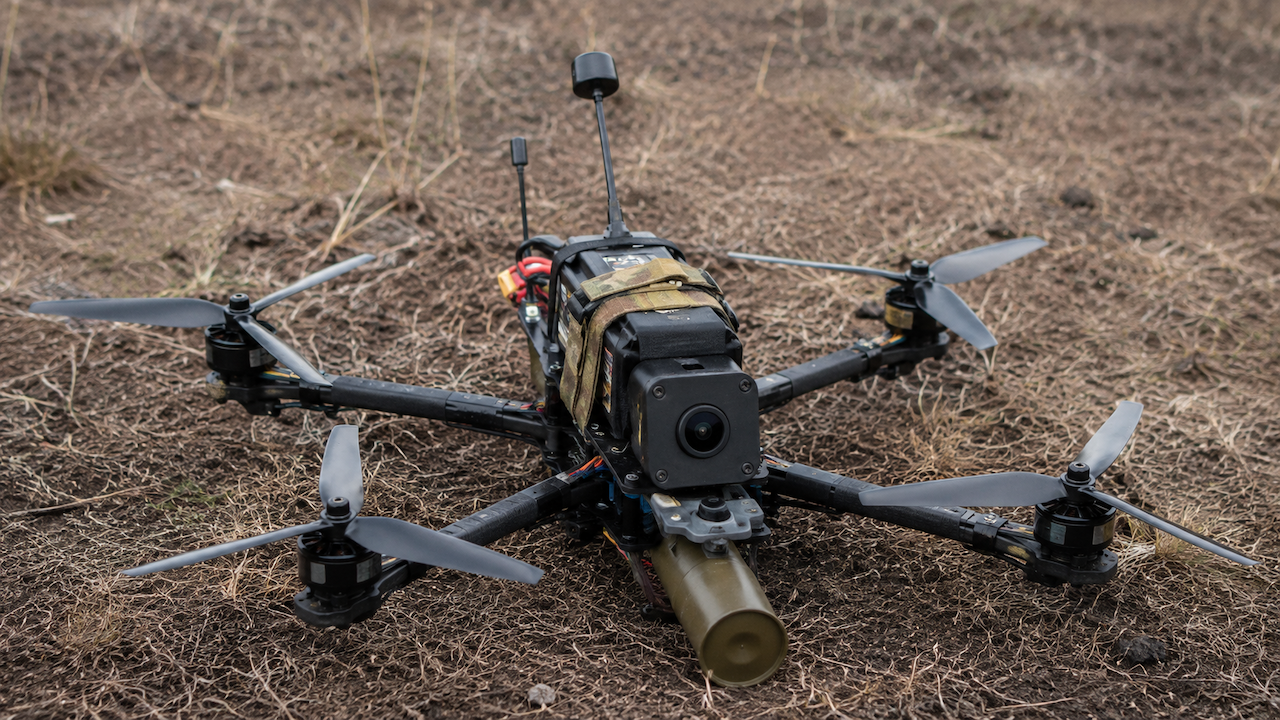
FPV drone (courtesy AI)
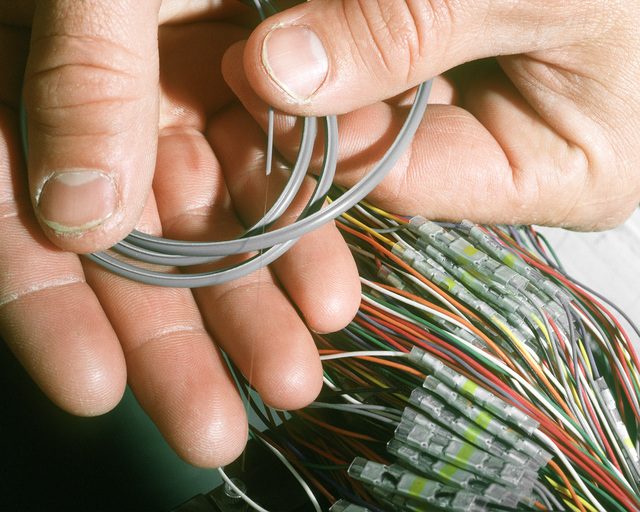
Fibreoptic cable (courtesy dronelife)
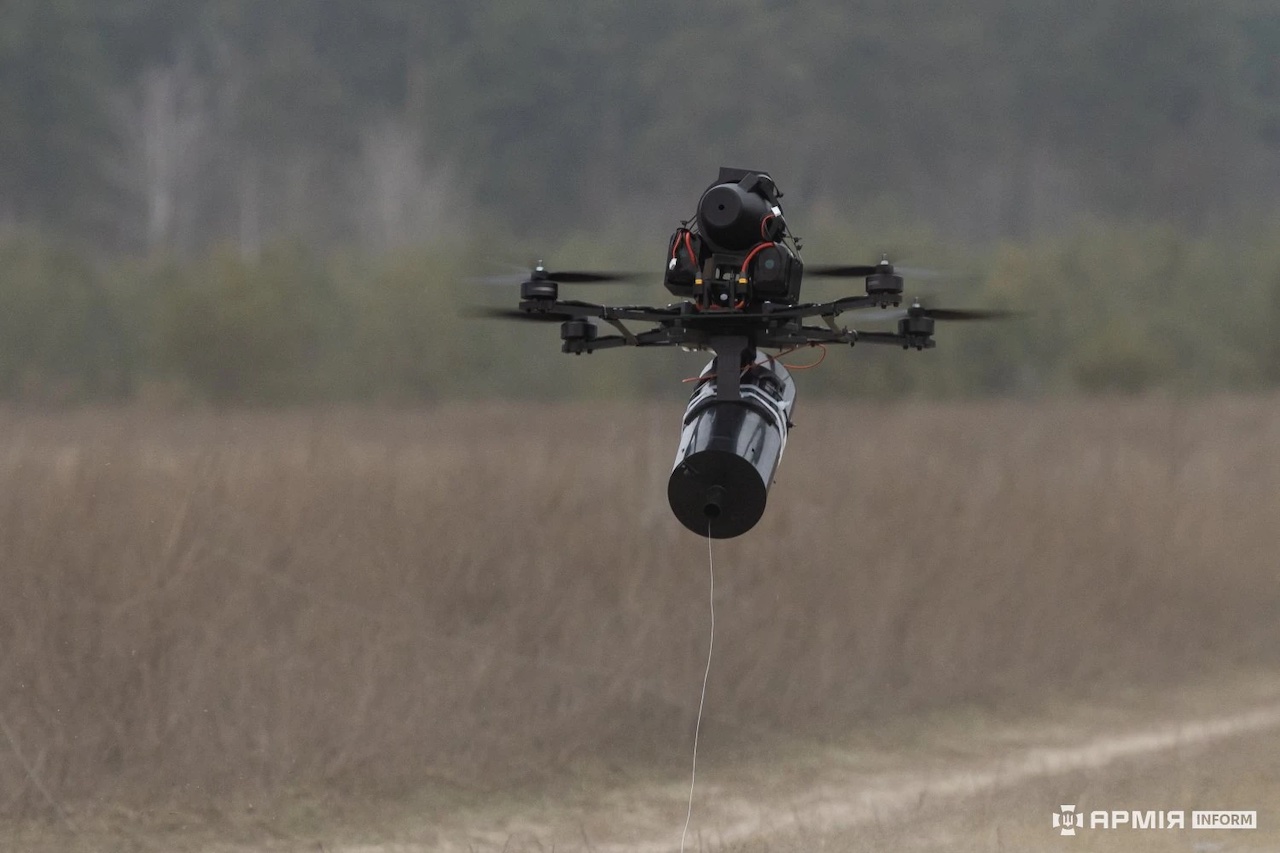
Drone unspooling its cable (courtesy Wikipedia)
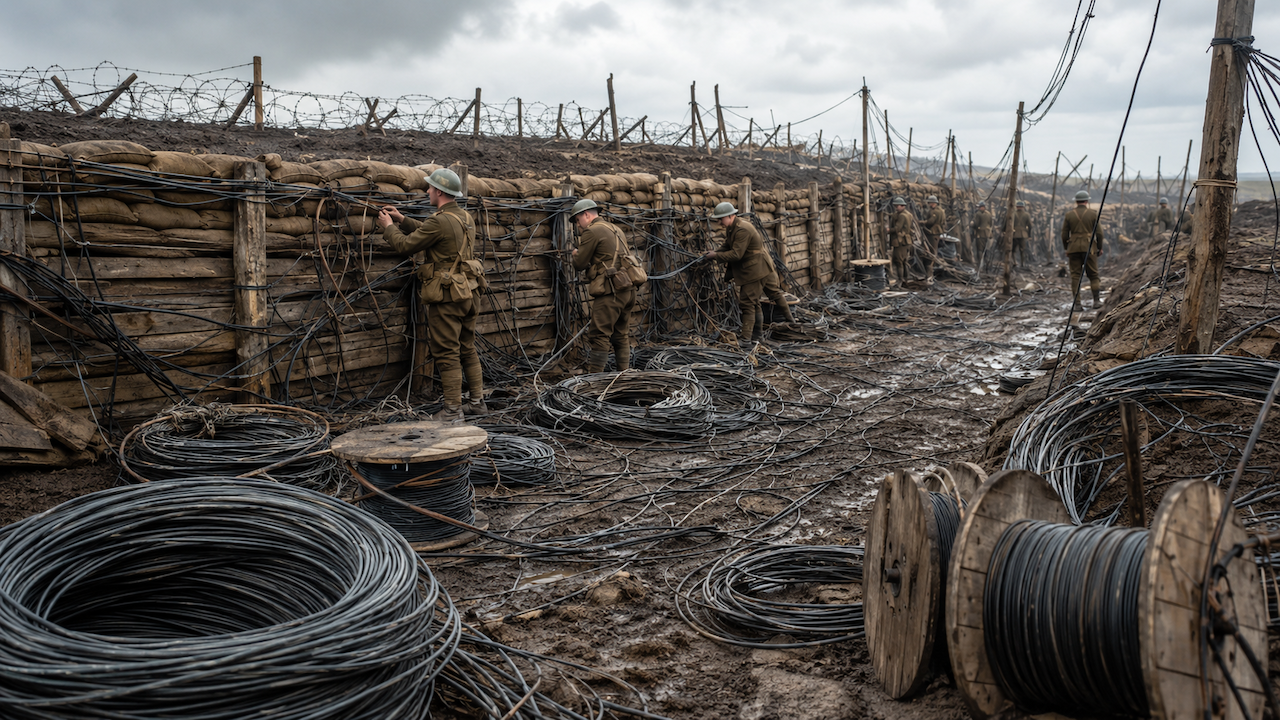
World War One trench with tangled cables and soldiers (courtesy AI)
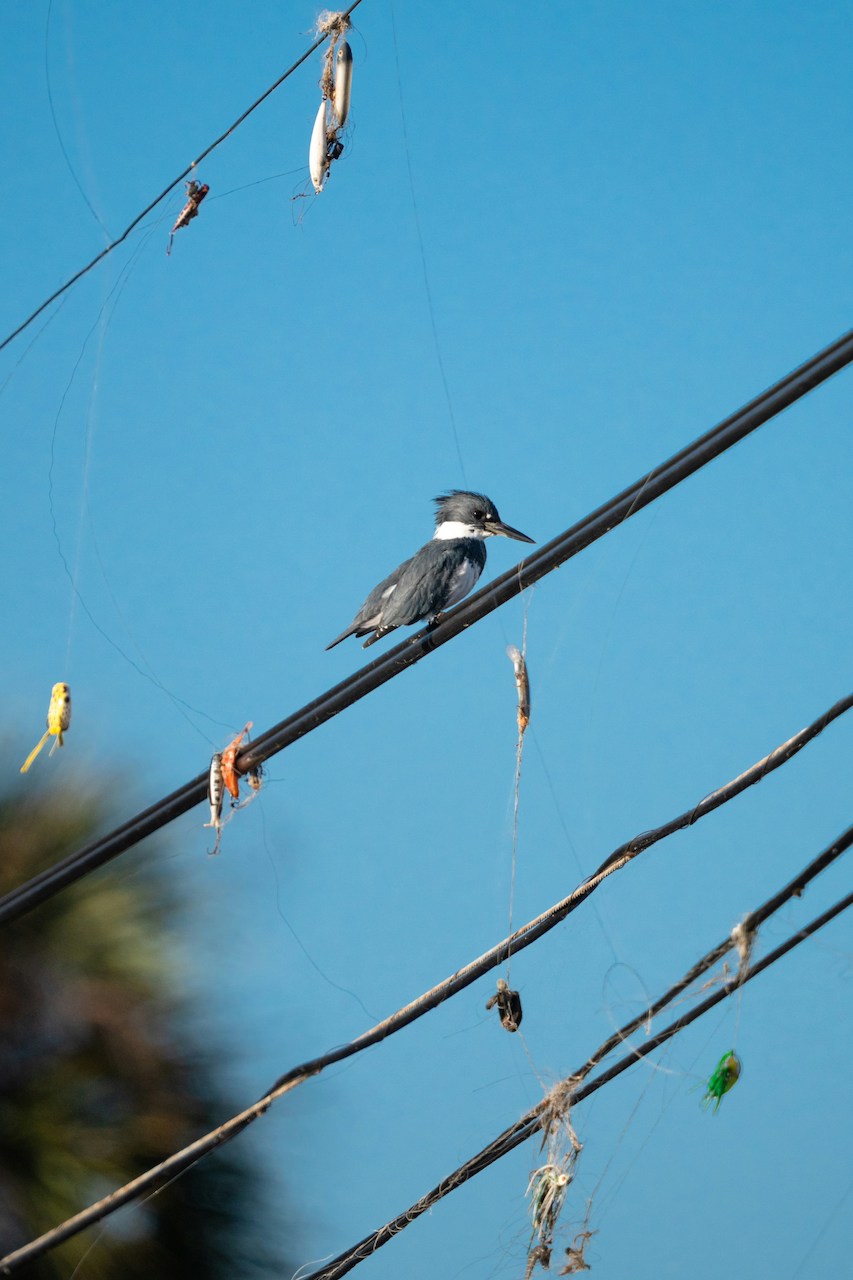
Fishing line and hooks can be a hazard to wildlife (Photo by Ryan Arnst on Unsplash)

The walls were filled with moss
Fibreoptic cable suspended from trees (courtesy Conflict and Environment Observatory)